

Throughout my career, I’ve met a particularly interesting boss. When I say “interesting,” it’s actually a euphemism. The real feeling was: from initial enthusiasm, to later entanglement, and finally to distancing myself.
Today I want to share this story with you, and what I learned from it.
First Meeting: Unusually Enthusiastic
Our acquaintance was quite accidental.
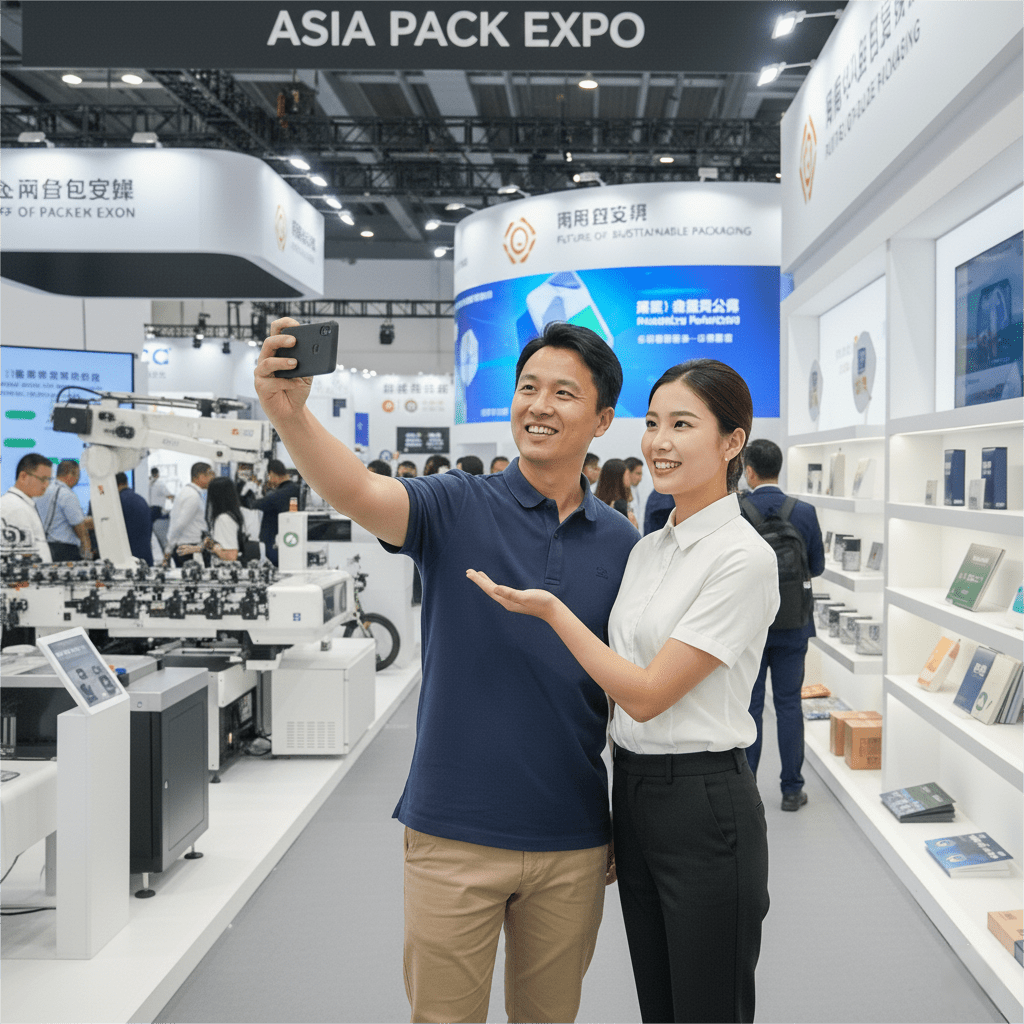
That year at the Shanghai Packaging Exhibition, I was exhibiting with a former colleague. His new company was near our booth, making end-of-line packaging equipment like case sealers and strapping machines. When I had time, I went over to say hello.
His new boss, L, enthusiastically came over and proactively added me on WeChat. At that time, I thought this boss was very warm and had the typical characteristics of a Chinese domestic sales person. Later it was confirmed that he was a boss who started by running the Pearl River Delta market himself.
Objectively speaking, this was a remarkable boss: not highly educated, self-made, and able to achieve his current scale—he definitely had his capabilities.
But something interesting happened.
First Unusual Sign: Holiday Greetings
A boss who would send me greetings during holidays and festivals.
In China, a country with thousands of years of hierarchical tradition, it’s very rare for a boss to proactively send greetings to an unrelated outsider. So I confirmed again: this boss is not simple—either he’s genuinely good-natured, or he has some purpose.
Later it turned out to be the latter.
First Test: Introducing Clients to Me
Once, he said he wanted to introduce some clients to me.
But his clients were all domestic sales, which I couldn’t accept. I politely said: “Thank you for your recommendation. I’ll pass the clients you recommended to our domestic sales colleagues for follow-up.”
Why did I say that?
Because over the years, our export and domestic sales teams have always had a consensus: Export sales won’t put energy into domestic clients, and domestic sales won’t touch export clients. This is their cake, we don’t touch it. Everyone maintains balance—that’s the way to get along and maximize company interests.
Although the Chinese market is large, it can’t compare to the world. The sales team must divide the work well. Don’t hurt feelings and miss markets for short-term small benefits, ultimately ending in chaos.
But when he heard my answer, I clearly felt unhappiness from the other end of the phone.
I could sense his emotions: ungrateful, not appreciating the favor.
This was the first time I felt that he seemed to be using these things to get close to me, with a purpose.
Second Test: Frequent Dinner Invitations
Later he took on a packaging line system project for a large new factory near us and often passed by our company. He would send a message when passing by, inviting me to dinner.
Honestly, I don’t like having dinner with bosses.
I think people doing export sales are a bit “proud” compared to those doing domestic sales. Because we focus more on substantive work and don’t like to spend our main energy at the dinner table.
The logic of foreign clients is:
- First do things well
- Follow up on orders well
- Talk about work well
- Then go to dinner
Dinner is the icing on the cake, not a necessity.
But China has a dining table culture:
- What can’t be solved by a meal and a bottle of wine?
- Everything happens at the table, drinking until drunk, and orders come
- I call this kind of meal a “political meal”:
- Eating or not eating, both are awkward
- When encountering different opinions, you have to suppress your anger
- Smile along, hide your true self
Honestly, it’s better to go home and have a bowl of noodles with family—much more comfortable.
But after he invited me countless times, I finally had dinner with him.
That Dinner: The Purpose Finally Revealed
I remember that day after work I had to pick up my child and go home first, then go to a restaurant near his home. The road during rush hour was very congested, turning what should have been a half-hour journey into almost an hour and a half.
He kept saying to take my time, he would wait no matter what time.
Actually, I wanted to turn back home many times because the road ahead was really all red lights. But I estimated he had something to tell me, so I still went.
Sure enough, after meeting, he started talking about how he started his business and how he hired people.
I understood the general meaning: He wanted me to go to his company to develop export sales.
But what was particularly interesting was: the salary he offered was the same as mine at that time. The same base salary, some commissions were the same as back then, some were slightly higher.
A bit funny—same salary and still job-hop?
Everyone knows the outcome, only he felt surprised.
Years Later: The Entanglement Begins Again
A few years later, I went to work at a new company.
He invited me again.
I said: “How about introducing you to my current boss?”
Actually, my thinking was:
- Let him give up—I would never go to his company
- Let my then-boss learn about the machinery industry—Maybe Boss L could bring some new ideas and new circles to him
As a result, Boss L kept saying he would introduce industry bigwigs to us, but it was always just talk with no actual action.
Instead, he made more “strange” requests:
Request 1: When we go abroad to develop markets, bring him and his team
Request 2: Asked if our company was hiring for export sales, wanted his child to learn from me
I found it particularly funny. Where did he get the confidence to make these requests?
Fortunately, only I was there at the time, otherwise it would have put my boss in a difficult position.
Why must we hire a fresh graduate? Particularly loves learning? What special skills?
The Last Straw: Asking Me to Find Clients for Free
Another time, he asked me to help him find clients.
Actually, his product customer base is very large, finding clients is particularly easy. Strapping machine clients can be:
- Machine distributors
- Factories
- Home appliance factories
- Food factories
- Basically any company producing products might use strapping machines
Not too broad. Just sit in front of a computer for an hour and you can find dozens.
But then another bug of his appeared.
He said: “You’re too busy, can you just send us the client list and we’ll follow up ourselves?“
Actually, I was more than happy to, because I was indeed very busy, and secondly, I didn’t want to deal with his business—he just kept pestering me.
So I sent him the client list I found that night.
He was very grateful, saying he would have his export sales colleagues follow up. I thought that was the end of it.
But the next day, he wanted me to teach his export sales colleague how to do the work.
His export sales employee, the first thing out of his mouth was: “What is WhatsApp?“
Obviously someone who had never done export sales.
Actually, I’m a proud person. I’m not afraid of you taking the client list. But I mind people underestimating export sales work and having a newcomer take over.
Moreover, I don’t think getting a client list means you can close deals. That’s just the first step. More importantly:
- Find the right person
- Start a conversation
- Make clients interested in the product or your company
- Interaction
Obviously, this Boss L was really not worth deep friendship. A bit “immature” and greasy.
Final Choice: Distance
He kept asking me: “Why didn’t you consider us when you changed jobs?”
Actually, the answer was already obvious.
From then on, I stopped replying to his messages and stopped answering his calls. Maybe after more than ten hours I’d reply: “Sorry, too busy, didn’t see my phone.”
Please forgive me for distancing myself in this way.
What Did I Learn?
Looking back at this experience, I learned several things:
1. Excessive enthusiasm is often purposeful
A boss who sends you greetings, invites you to dinner, and introduces clients for no reason—that’s not normal.
Normal business relationships should be:
- Talk business when there’s business
- Mutually beneficial
- Clear boundaries
Excessive enthusiasm is often laying groundwork for later “requests.”
2. Don’t be moved by “self-made” stories
Boss L was indeed self-made and indeed remarkable.
But that doesn’t mean he’s worth deep friendship, doesn’t mean his character is good.
Entrepreneurial success ≠ Good character
3. Workplace relationships need boundaries
Boss L’s problem was: he didn’t understand boundaries.
- Frequent dinner invitations—invaded my personal time
- Requesting to bring him abroad—invaded my company’s interests
- Asking me to find clients for free and teach his employees—invaded my professional value
Relationships without boundaries will eventually suffocate people.
4. Stay away from “taker” personalities
Boss L is a typical “taker” personality:
- He wanted me to work at his company
- He wanted me to introduce clients to him
- He wanted me to teach his employees
- He wanted me to take him abroad to develop markets
But what did he give me?
The same salary? A bunch of empty promises?
This kind of relationship is unequal and not worth maintaining.
5. Don’t force yourself because you’re “embarrassed to refuse”
Why did I agree to have dinner with him? Why did I help him find clients?
Because I was “embarrassed to refuse.”
But later I discovered that your “embarrassment” will be taken as “weakness” by some people.
They will push further and make more demands.
So, refuse when you should refuse, distance when you should distance.
Final Thoughts
This story is actually a story about “boundaries.”
In the workplace, we meet all kinds of people. Some are worth deep friendship, some can only be kept at a distance.
To judge whether someone is worth deep friendship, don’t look at how enthusiastic or successful they are, but look at:
- Do they respect your boundaries?
- Do they only take without giving?
- Do they treat you as a tool or as a friend?
If the answer is negative, then it’s time to distance yourself.
Don’t let yourself fall into uncomfortable relationships because you’re “embarrassed.”
Your time, energy, and expertise are all precious. Save them for people who deserve them.
Right?
About the Author:
I’m an export sales professional in the packaging equipment industry with 10 years of experience, having seen all kinds of people and situations. If you have similar experiences, feel free to share in the comments.
For more thoughts on export sales, workplace, and life, visit my website:www.fill-package.com