

Heading 1: Is Your Production Line Hiding a Sanitation Risk?
When preparing for a strict food safety audit, most managers focus on conveyor belts and weighers. However, the often-overlooked machine leveling feet can be a major source of bacterial growth. Standard industrial feet often have exposed threads and anti-slip grooves that trap food particles and moisture. Consequently, these areas become impossible to clean effectively, leading to potential cross-contamination.
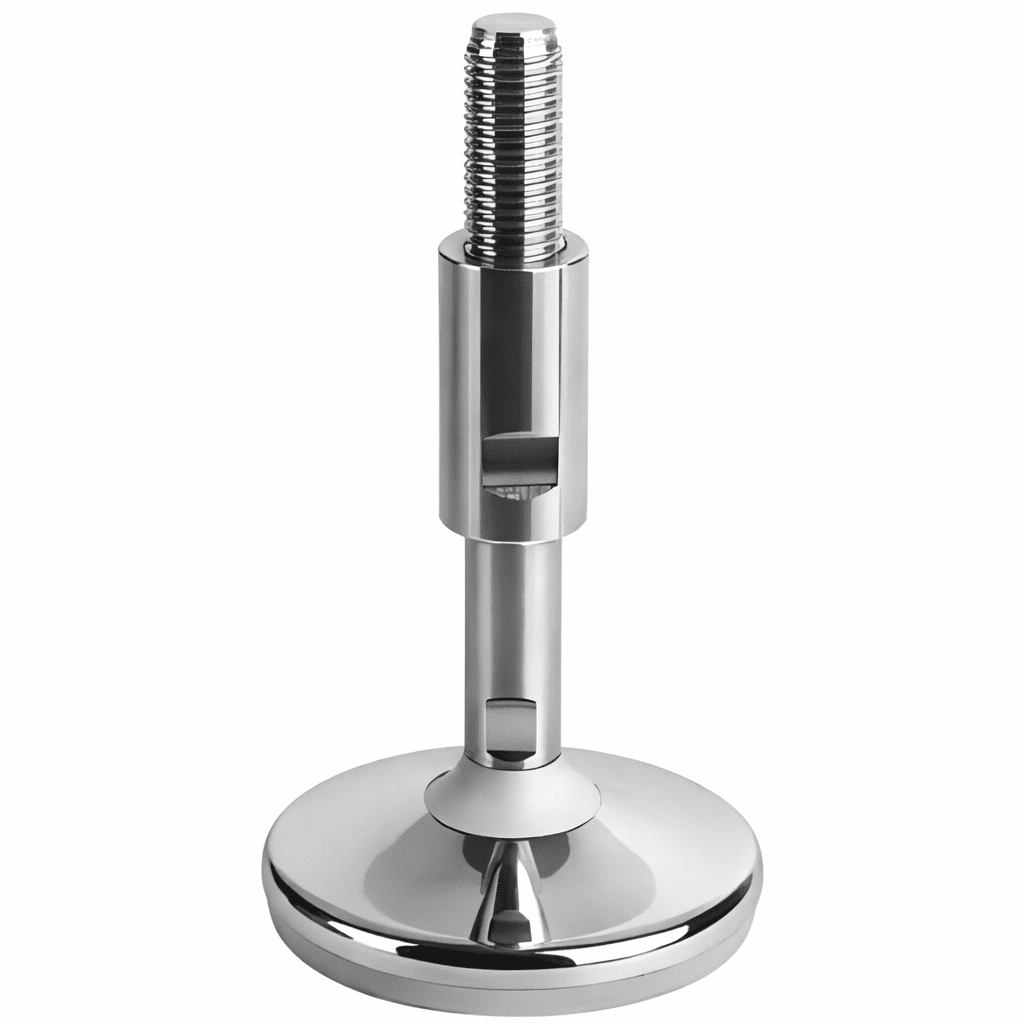
Heading 2: Standard vs. Hygienic Design: Understanding the Critical Differences
Many buyers confuse heavy-duty stability with food-grade compliance. In contrast, “Hygienic Design” feet are engineered specifically for cleanroom and food-processing environments. Therefore, understanding these differences is vital for your facility’s safety:
| Feature | Standard Heavy-Duty Feet | Hygienic Design (Food Grade) |
| Core Philosophy | Stability and high load capacity. | Easy-to-clean, zero-residue, and germ-proof. |
| Material & Surface | Carbon steel or low-grade SS; rougher finish. | Polished 304/316L Stainless Steel; mirror finish. |
| Sealing Structure | Exposed threads and gaps. | Dual-layer seals; no hidden gaps for bacteria. |
| Certifications | None. | FDA & 3-A Sanitary Standards compliant. |
Heading 3: 4 Key Technologies That Define a Hygienic Machine Foot
To achieve the goal of “easy-to-clean and anti-bacterial,” specialized engineering is required. Specifically, when you choose integrated packaging solutions from Fill Package, we focus on these four technical dimensions:
1. Mirror-Polished Surfaces:
Our hygienic feet use 304 or 316L stainless steel with a high-gloss polish. Moreover, this mirror-like finish prevents water and dirt from adhering to the surface. As a result, waste simply slides off during a standard washdown.
2. Advanced Sealing and Thread Protection:
This is the core difference. Traditional feet have gaps where the bolt meets the base. Conversely, hygienic models utilize dual-layer silicone seals to cut off all contamination channels. Additionally, some models include a sleeve to cover the threads entirely, preventing grease buildup in the grooves.
3. FDA-Approved Non-Metallic Materials:
Every seal and anti-slip pad must be non-toxic. For this reason, we use FDA-approved NBR or silicone. Furthermore, these materials are resistant to the aggressive corrosive chemicals used in daily sanitation.
4. 15° Tilt Base with Vibration Dampening:
Floors are rarely perfectly flat. Consequently, our hygienic feet feature a swiveling base (up to 15°) to ensure stable contact. By doing so, they also provide vibration dampening, which protects the accuracy of your multihead weighers.
Heading 4: Choosing the Right Foot for Your Specific Industry
Not every line requires the highest 3-A certification. However, if you are in the following sectors, hygienic feet are non-negotiable:
Ready-to-Eat & Dairy: Requires the highest 3-A and FDA standards.
Meat & Poultry Processing: Needs high corrosion resistance for harsh washdowns.
Pharmaceuticals & Biotech: Focuses on zero-dust and mirror-finish surfaces.
Conclusion
The foundation of a food-safe facility starts at the floor. By investing in hygienic-design leveling feet, you are not just buying a support part; you are ensuring your facility is always ready for its next inspection.
Next Step: Does your current setup meet these standards? Consult our engineers to find the perfect hygienic support for your integrated system.