

1. The “Z-Type” Trap in Meat Processing
In a food factory, the shape of your conveyor determines the speed of your sanitation. Many generic suppliers suggest Z-Type Bucket Elevators because of their shape. However, for raw poultry or marinated meat, the complex chain-and-bucket structure of a Z-Type is a hygiene nightmare. Meat juices seep into the mechanical parts, making it nearly impossible to pass a strict biological audit.
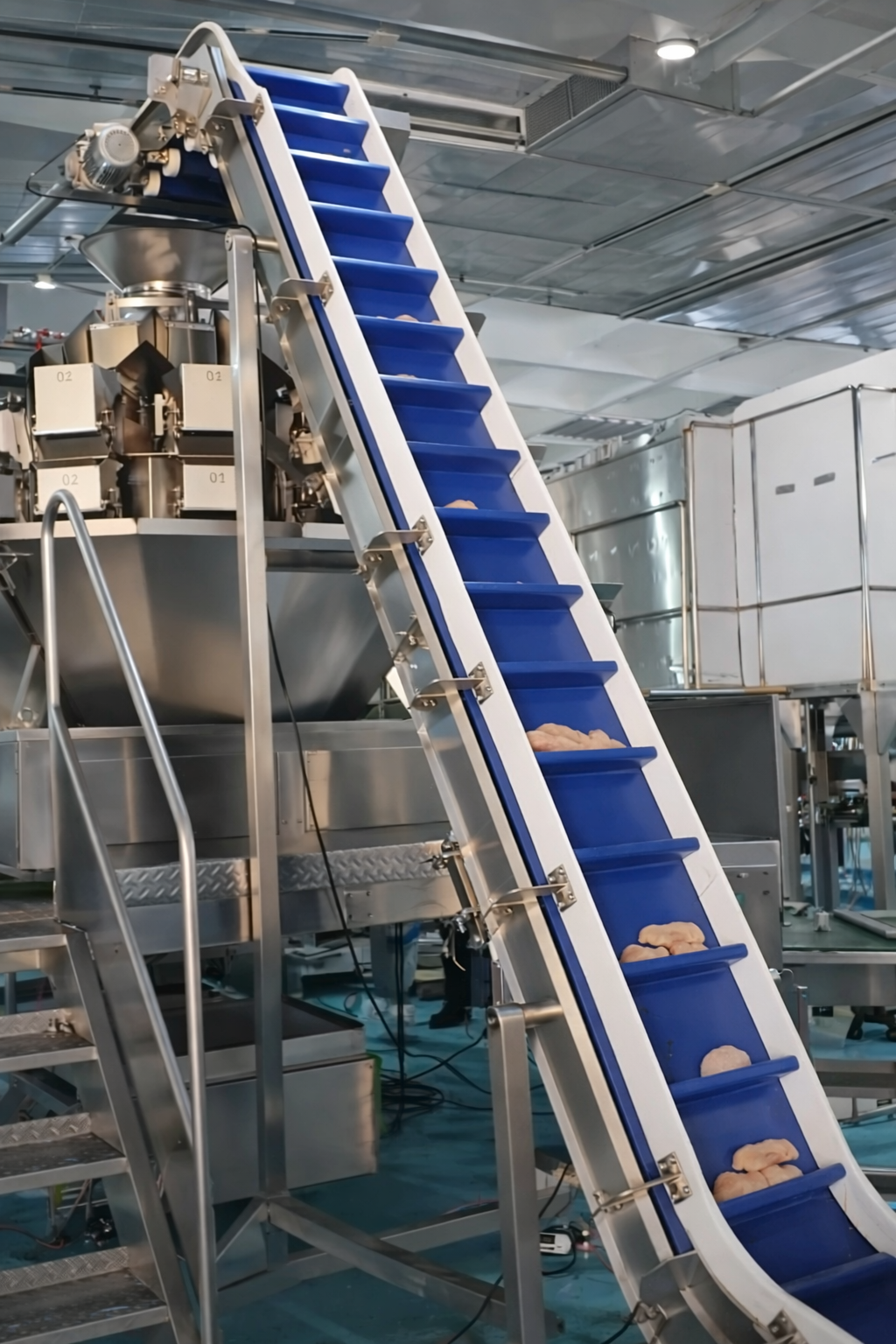
2. Why Inclined Belt Conveyors are the Professional Choice
For fresh meat like chicken breasts, wings, and scraps, the industry standard has shifted to Easy-Clean Inclined Belt Conveyors. No Pacote de preenchimento, we customize these based on two high-performance materials:
Professional PU Belts: Our top-tier choice for raw meat. PU (Polyurethane) is naturally oil-resistant e anti-sticking. Its smooth, non-porous surface prevents proteins from bonding to the belt, ensuring a clean release into the weigher.
Correias Transportadoras Modulares: Ideal for heavy-duty loads or specific drainage requirements. These are easy to repair and highly durable in cold-room environments.
3. Engineered for Rapid Sanitation
The “Easy-Clean” name isn’t just marketing—it’s an engineering promise.
Open-Frame Design: Unlike enclosed bucket systems, our inclined conveyors offer 360° wash-down access. Your team can spray the entire belt and frame in minutes.
High-Profile Cleats: We use customized cleats (flights) to ensure that even the slickest marinated chicken moves up the incline without sliding back, maintaining a steady feed to your Alimentador de parafuso e balança multicabeçote.
4. Tailored to Your Specific Material
Whether you need the premium anti-stick properties of PU or the ruggedness of Modular belts, we consult with you on the specific “stickiness” and “oil content” of your product.
“In meat automation, the right conveyor belt is the difference between an efficient shift and a 4-hour cleaning delay.”