

Choosing the right conveying solution is one of the most important decisions when designing or upgrading a packaging line. Two commonly used solutions are flat top chain conveyors Và modular conveyor belts. While both are widely used across automated packaging systems, they are designed to solve different conveying challenges.
Understanding the structural differences, performance characteristics, and application suitability of these two conveying technologies helps manufacturers select the most efficient and reliable solution for their production lines.

How Flat Top Chain Conveyors Work
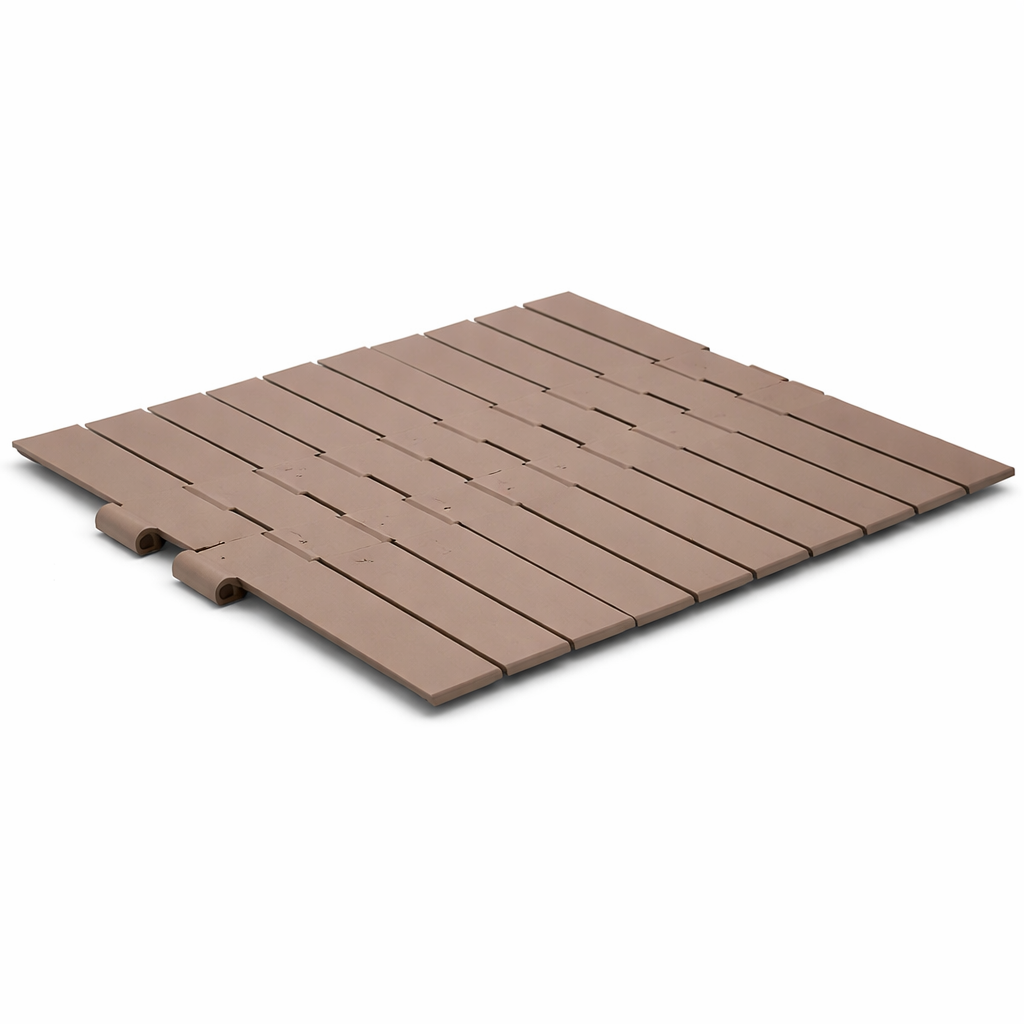
Flat top chains—also known as slat top chains or tabletop chains—use interconnected chain links to create a rigid and stable conveying surface. The chains are driven by sprockets, allowing precise and predictable product movement.
Flat top chain conveyors are commonly used when products must remain upright, aligned, and evenly spaced throughout the packaging process. Their rigid structure helps maintain product orientation and ensures smooth transfers between packaging machines.
Flat top chains are frequently used in conveying:
Bottles and containers
Cans and rigid packaging
Cartons and boxed products
Products requiring consistent spacing
How Modular Conveyor Belts Work
Modular conveyor belts consist of interlocking plastic modules connected by hinge rods to form a continuous belt surface. Unlike chain-based conveyors, modular belts provide greater flexibility and adaptability for conveying products with varying shapes and sizes.
Modular conveyor belts are commonly selected for applications involving:
Irregular product shapes
Bulk product handling
Fragile or delicate items
Inclined or curved conveying systems
Because of their modular design, these belts can be customized for different conveying environments and product handling requirements.
Stability and Product Handling Comparison
One of the main differences between flat top chains and modular conveyor belts is how they support product stability.
Flat top chains provide a rigid conveying surface that helps maintain product alignment and reduces product movement during transportation. This makes them particularly suitable for upright containers and packaging processes requiring precise product positioning.
Modular conveyor belts offer more flexibility and adaptability, allowing them to handle products with uneven shapes or varying sizes. However, they may not always provide the same level of positional stability as flat top chains when handling rigid containers.
Application Suitability
The choice between flat top chains and modular conveyor belts often depends on product type and packaging line requirements.
Flat top chains are typically preferred when:
Products must remain upright and aligned
Packaging lines require consistent product spacing
Transfers between machines must remain stable
Rigid containers are being conveyed
Modular conveyor belts are typically preferred when:
Products vary in shape or size
Bulk or loose products are handled
Conveying paths include steep inclines
Gentle product handling is required
Selecting the correct conveying solution requires careful evaluation of product characteristics and production line layout.
Maintenance and Operational Considerations
Both flat top chains and modular conveyor belts are designed for long-term operation in automated packaging systems, but their maintenance characteristics differ.
Flat top chains are known for their robust chain-driven design, which provides predictable and reliable performance. They are commonly used in high-speed packaging environments where consistent operation is essential.
Modular conveyor belts are valued for their flexibility and ease of modular replacement. Individual belt sections can often be replaced without removing the entire conveyor belt, helping reduce maintenance downtime.
Maintenance requirements depend on operating conditions, product type, and environmental factors.
Layout and Integration with Packaging Equipment
Flat top chains are frequently used in packaging lines where products move through multiple processing stages, including filling, capping, labeling, and inspection. Their stable conveying characteristics help maintain product positioning during machine transfers.
Modular conveyor belts are often used in applications that require complex conveying paths, including curves, inclines, and product accumulation sections. Their modular structure supports flexible conveyor system designs.
When Flat Top Chains Are the Better Choice
Flat top chains are typically the preferred solution when packaging lines require:
Stable upright product conveying
Precise product spacing
Reliable transfers between packaging machines
Consistent high-speed operation
When Modular Conveyor Belts Are the Better Choice
Modular conveyor belts are generally preferred when packaging lines require:
Flexible conveying for irregular products
Inclined or curved conveyor sections
Gentle handling of fragile products
Adaptable conveyor system configurations
Choosing the Right Conveying Solution
Selecting between flat top chains and modular conveyor belts should be based on a full evaluation of:
Đặc điểm sản phẩm
Production speed requirements
Conveyor layout design
Environmental and maintenance considerations
Carefully matching the conveying solution to production requirements helps improve packaging efficiency and long-term system reliability.
Explore Conveying Solutions for Packaging Lines
If you are designing or upgrading a packaging line, selecting the correct conveying solution is essential for stable and efficient production.
👉 Learn more about Flat Top Chains for Packaging Lines
👉 Explore Plastic Flat Top Chains for food and high-speed applications
👉 Discover Xích phẳng inox for demanding environments
👉 View Modular Conveyor Belts for flexible product conveying solutions