

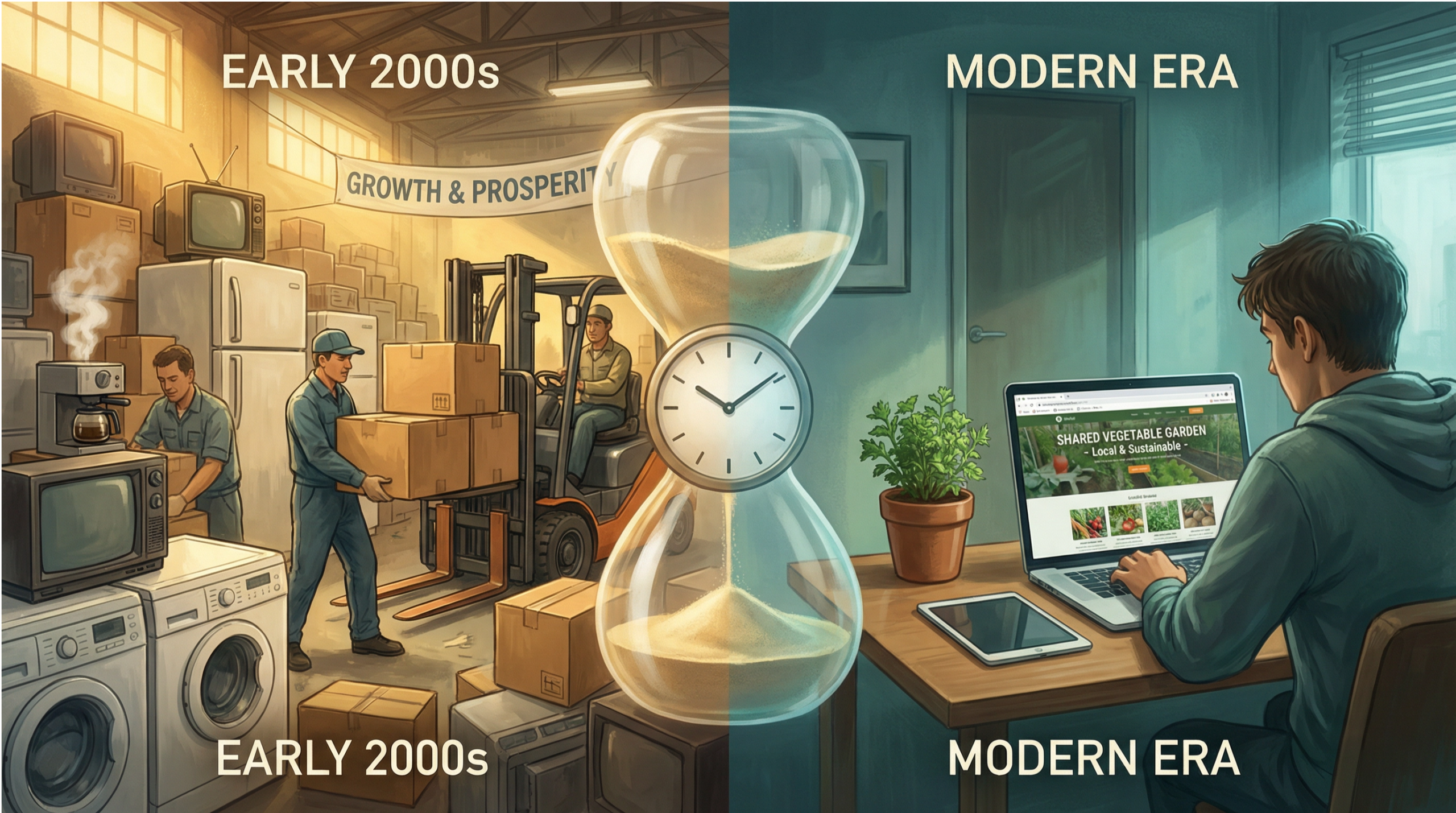
Después de escribir blogs técnicos por un tiempo, yo, que no soy un gurú de la tecnología, inevitablemente siento un poco de monotonía. Con el Año Nuevo a la vuelta de la esquina, pensé en compartir una historia interesante de las fiestas. Se trata del tiempo, la oportunidad y la percepción
I. La Oportunidad de Hace Veinte Años
Visitar a los familiares durante el Año Nuevo es una tradición aquí. Traemos frutas y bocadillos, charlamos y damos sobres rojos a los niños. Es un momento de alegría. Uno de mis parientes es mayorista de electrodomésticos. Hace unos treinta años, se convirtió en el distribuidor de una marca local de electrodomésticos, distribuyendo sus productos en el Delta del Río Perla, junto con algunos productos de fábricas más pequeñas.
Se podría decir que aprovechó plenamente el dividendo demográfico de esa era. Durante veinte años, el mercado inmobiliario chino estuvo en auge, y los electrodomésticos, como artículo “estándar”, fueron un producto muy demandado en todo el país. Aún recuerdo, poco después de graduarme, que su hermano pequeño amablemente me llevó a su almacén y oficina, con la esperanza de ayudarme a encontrar un camino. Su idea era simple: tomaría las mercancías de mi pariente y las vendería en el extranjero para ganar algo de dinero por mi cuenta.
Fue el amanecer del comercio electrónico en China. Olvídate de vender en el extranjero; incluso abrir una tienda en Alibaba significaba que tendrías negocio. Escuché que alguien ya había abierto una tienda en Tmall, en Taobao, obteniendo productos de este pariente y le iba bastante bien. Su almacén era enorme, lleno de mercancía. Su hermano fue aún más directo: “Adelante, toma sus productos para vender. No necesitas pagar en efectivo. Puedes usar el buen nombre de tu padre para retrasar el pago por mucho tiempo”.”
Sin embargo, ante esta oportunidad aparentemente dorada, dudé. Había estudiado economía y me dedicaba al comercio exterior B2B, sin experiencia en operaciones C2C. Más importante aún, sus productos eran artículos voluminosos, lo que hacía que los costos logísticos y los riesgos de envíos individuales de C2C al extranjero fueran extremadamente altos. Me enteré de que el modelo de “almacén en el extranjero” estaba en sus inicios, y era el modelo perfecto para sus productos, pero construirlo desde cero era una tarea desalentadora. El servicio posventa era otro gran obstáculo. Lo más importante es que sentí que mi visita era una sorpresa para él; no había mucha alegría en su expresión. Quizás, a sus ojos, yo era solo otro junior que intentaba obtener algunos beneficios “usando la cara de mi padre”. Por diversas razones, al final no elegí este camino. En cambio, regresé obedientemente a la fábrica y continué mi carrera en ventas B2B. Aunque mi vida no era tan próspera como la suya, era estable.
II. La “obsesión” veinte años después
El tiempo vuela. En los últimos dos o tres años, el mercado inmobiliario ha frenado en seco, y las industrias relacionadas han sentido el frío, siendo la industria de electrodomésticos la más afectada. Como nadie compra casas, nadie compra electrodomésticos. Supe que el negocio de mi pariente ha estado luchando este año.
Todavía vino de visita este año. En la mesa, oí que todavía preguntaba por mí, preguntándose si yo aún podría llevar a cabo la idea de hace todos esos años: vender sus productos en el extranjero.
No pude evitar reírme cuando escuché esto. Me di cuenta de que nuestra comprensión de los negocios ya no estaba en la misma línea de tiempo.
El tiempo no espera a nadie.
El comercio electrónico fue la tendencia hace veinte años. Habiendo perdido los primeros veinte años, y luego los siguientes diez, en 2026, ¿quieres que venda una marca desconocida de electrodomésticos de un distribuidor a un país extranjero? La dificultad no es menor que pedir al gigante minorista offline Suning que regrese a su época dorada hace una década.
La esencia de los negocios nunca ha sido forzar lo que tienes en los clientes, sino ganar dinero resolviendo sus problemas de alguna manera. Los tiempos han cambiado, los problemas de los clientes han cambiado y las soluciones deben evolucionar naturalmente.
III. ¿Caída económica? ¿O un cambio de percepción?
Mucha gente dice: “La economía está mal, es difícil ganar dinero”. Mi entendimiento es un poco diferente: no es que sea más difícil ganar dinero, sino que la economía creció tan rápido en el pasado que todos nos acostumbramos a la sensación de volar en un tren de alta velocidad. Ahora que el tren ha reducido la velocidad, muchas personas sienten una fuerte incomodidad.
Más importante aún, algunos de los afortunados que subieron al primer tren, su riqueza y su percepción no están completamente alineadas. Cuando la marea de los tiempos retrocede, este desajuste queda expuesto. Y este es precisamente el comienzo de nuevas oportunidades, oportunidades de ganar dinero que la “vieja guardia” no puede ver ni imaginar.
Por ejemplo, la reciente tendencia en línea de “huertos comunitarios”. Divide sus servicios en tres niveles según la participación del cliente:
1.El cliente “granjero”: Vive cerca y tiene tiempo para gestionar la parcela por sí mismo. El precio es el más bajo y disfruta del placer de cultivar.
2.El Cliente “Gestionado”: Solo tiene tiempo los fines de semana. La parcela es administrada por el personal del jardín entre semana, a un precio ligeramente superior.
3.El cliente “Nube”: No tiene tiempo en absoluto y solo quiere “ver su parcela en línea”. El precio es el más alto, con el personal del jardín asumiendo toda la responsabilidad y enviando la cosecha al cliente.
Verás, el mismo trozo de tierra, al ofrecer diferentes servicios y experiencias, satisface las necesidades espirituales de diferentes grupos de personas. En la era actual de abundancia material, El consumo espiritual y el consumo experiencial son la corriente principal del futuro.
También quiero darle un consejo a mi familiar: el negocio mayorista de electrodomésticos probablemente continuará en declive, y su forma final serán las ventas directas de los fabricantes y la personalización. Si no puedes encontrar un camino completamente nuevo, es mejor invertir tu dinero en una gestión financiera sólida en lugar de fantasear con revivir una industria moribunda. Después de todo, ninguno de nosotros es un superhéroe que pueda retroceder el tiempo.
En Fill-Package, esta es también nuestra filosofía. No solo vendemos acero y cintas; vendemos lógica de eficiencia adaptada a tus necesidades específicas, ya sea una carga de 1 tonelada de cartón corrugado o un montón pegajoso de algas marinas. En esta “era rompedora”, la perspicacia es más valiosa que el simple trabajo duro.
Retroenlace: inyección de omeprazol fda
Retroenlace: Usos de Revatio
Retroenlace: precio de tabletas de semaglutida
Retroenlace: Proscar o Avodart
Retroenlace: efectos a largo plazo del metronidazol
Retroenlace: sildenafil and cialis difference
Retroenlace: tadalafil generic cialis
Retroenlace: bupropion sr vs xl sleep
Retroenlace: acyclovir stomach cramps
Retroenlace: terbinafine dosage for ringworm
Retroenlace: ivermectin strongyloides treatment evidence
Retroenlace: ivermectin pharmacokinetic behavior
Retroenlace: minoxidil regrowth evidence
Retroenlace: vardenafil food‑related factors
Retroenlace: medical review reference
Retroenlace: orlistat common side effects
Retroenlace: Sildenafil Meal Effects
Retroenlace: Alcohol Interaction Resource
Retroenlace: Sildenafil vs vardenafil pharmacokinetic profile
Retroenlace: sildenafil disposition
Retroenlace: sildenafil reference guide
Retroenlace: generic tadalafil equivalence