

Introduction: The “Pipe” vs. The “Valve”
In the world of packaging automation, terminology matters. We often hear project managers ask, “Can’t we just use a conveyor to feed the scale?”
The short answer is: You can, but you shouldn’t.
While both machines move product, they serve fundamentally different engineering functions. Confusing the two is a primary reason why packaging lines fail to reach their target accuracy and speed.
To help you design a more efficient line (and justify the right equipment choices to your team), here is the engineering breakdown of Feeding Systems vs. Conveyor Systems.
The Quick Analogy: Think of your production line as a plumbing system.
Sistemas transportadores are the Pipes: Their job is to move water (product) from the source to the destination efficiently.
Feeding Systems are the Valves: Their job is to control the flow rate, ensuring the cup (package) is filled precisely without spilling.
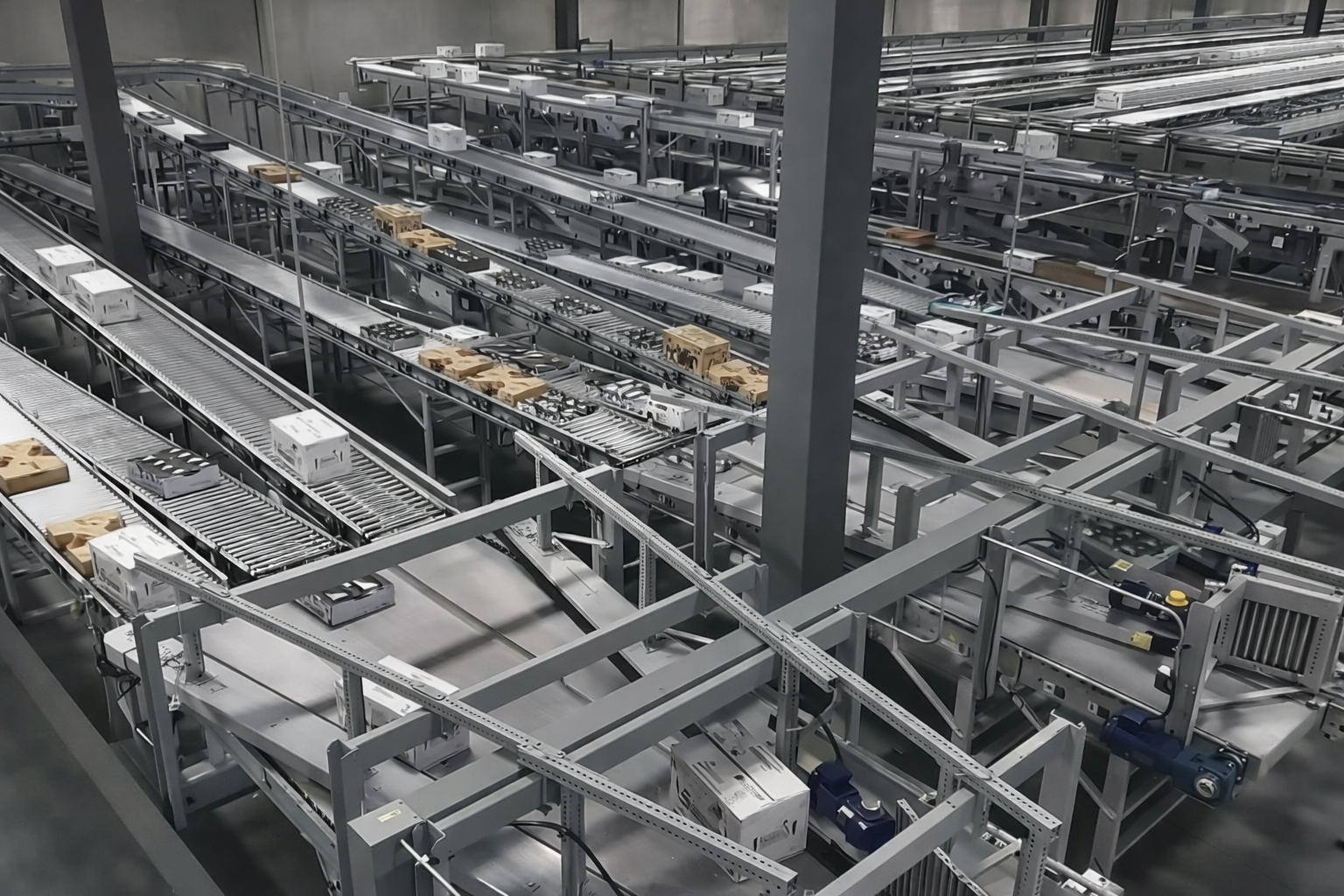
What Feeding Systems Are Designed to Do
A Sistema de alimentación (such as a Vibratory Feeder or Screw Feeder) is not primarily about distance; it is about Transformation. Its goal is to take a chaotic bulk flow and transform it into a disciplined, measurable stream.
Feeding systems are engineered to:
Regulate Rate: Delivers product at a precise volume per minute (e.g., “trickle feeding” a weigher).
Singulate Product: Separates sticky or interlocking items (like chicken breasts or hardware) into single pieces.
Condition Flow: Breaks up clumps in powders or smooths out surges in solids.
Respond Instantly: Designed for high-frequency Start/Stop cycles without motor burnout.
Key Equipment: Vibratory Feeders, Flexible Screw Feeders, Linear Feeders.
What Conveyor Systems Are Designed to Do
A Sistema transportador is about Logística. Its primary goal is to bridge the physical gap between processing stages—transporting product from the kitchen to the packaging hall, or elevating it from floor level to the mezzanine.
Conveyor systems are engineered to:
Cover Distance: Moves product horizontally or vertically over meters or tens of meters.
Handle Bulk: Transport large volumes of material efficiently.
Connect Processes: Links the Fryer to the Weigher, or the Bagger to the Case Packer.
Run Continuously: Typically operates at a steady state for long periods.
Key Equipment: Bucket Elevators, Incline Belt Conveyors, Modular Belt Conveyors.
Why Feeding Systems Focus on Control, Not Distance
Why can’t a standard belt conveyor replace a feeder? Because conveyors lack the “nuance” required for precision.
The Multihead Weigher is a sensitive instrument. If you dump product onto it from a fast-moving belt conveyor:
The “Avalanche” Effect: The belt dumps a large pile at once. The weigher gets flooded, leading to overweight rejects.
Lack of Braking: Standard conveyor motors have inertia. When the weigher says “Stop,” the belt coasts for a second, dumping extra unwanted product.
Feeding Systems focus on Control:
Vibration Amplitude: A vibratory feeder can adjust its intensity to spread product out thinly.
Servo/Stepper Precision: A screw feeder can rotate exactly 45 degrees to dispense a specific gram amount.
Instant Stop: They utilize electromagnetic drives or servo motors to stop flow effectively instantly, ensuring weighing accuracy.
How Feeding and Conveying Work Together in Packaging Lines
An optimized packaging line isn’t about choosing one o the other. It’s about using them in the right sequence.
The “Handshake” Workflow:
The Transport (Conveyor System): A Elevador de cangilones brings bulk chips up from the fryer to the mezzanine level. It does the heavy lifting over distance.
The Handoff: The elevator dumps the chips into a small surge hopper.
The Control (Feeding System): A Alimentador vibratorio sits under the hopper. It gently vibrates to move the chips forward in an even, single layer towards the Multihead Weigher.
The Feedback: When the weigher is full, it signals the Feeder to stop. The Feeder stops instantly. Meanwhile, the Transportador (Elevator) might slow down or fill a buffer, waiting for the feeder to resume.
Conclusión: Use Conveyors to get the product there. Use Feeders to ensure the product arrives correctly.
Building a new line? Make sure you have the right mix. Don’t let a “transport” solution ruin your “precision” process. Let us help you design a layout that balances efficient conveying with precise feeding.