

Sistemas transportadores integrados para líneas de envasado
No permita que un flujo deficiente de material frene su línea de envasado. Sistemas transportadores Diseñamos sistemas de transporte que integran a la perfección sus envasadoras VFFS, pesadoras multicabezal y estaciones de envasado.
No deje que un flujo deficiente de material obstaculice su línea de envasado.
La velocidad de su línea de envasado depende de su punto más lento. Cuando el flujo de material es irregular, su pesadora multicabezal se queda sin producto, su envasadora VFFS queda en espera y su encajonadora permanece inactiva. El resultado son pérdidas de producción, operadores frustrados y objetivos de entrega incumplidos. Un sistema transportador integrado no consiste únicamente en mover producto del punto A al punto B. Se trata de orquestar un flujo continuo y sincronizado de materiales en cada etapa de su proceso, asegurando que cada máquina reciba exactamente lo que necesita, justo cuando lo necesita.
En Fill Package, diseñamos e integramos sistemas transportadores completos que eliminan cuellos de botella, reducen el tiempo de inactividad y maximizan la Eficiencia Global de los Equipos (OEE). Nuestro enfoque combina la tecnología de transporte adecuada para cada etapa de su línea con controles inteligentes que se adaptan a las demandas de producción en tiempo real. Ya sea que maneje papas fritas delicadas, queso pegajoso, polvos abrasivos o componentes de formas irregulares, contamos con la experiencia y los equipos necesarios para mantener su línea funcionando sin problemas.
La dinámica del flujo de materiales en el envasado
El flujo de material es la ciencia de mover productos de manera eficiente a través de un entorno de producción. En el envasado, esto significa mantener una transferencia constante, controlada y suave del producto desde el almacenamiento a granel, pasando por el pesaje, el llenado y el envasado final. Un flujo de material deficiente genera tres problemas críticos. Primero, provoca desabastecimiento, donde los equipos posteriores esperan el producto, lo que reduce el rendimiento. Segundo, conduce a la inundación, donde demasiado producto satura una máquina, causando atascos y desperdicio. Tercero, provoca daños al producto, ya que una manipulación brusca lo rompe, lo aplasta o degrada su calidad.
Un sistema transportador bien diseñado resuelve estos problemas equilibrando la velocidad, la capacidad y el control en cada punto de transferencia. Utiliza amortiguación para absorber las variaciones del suministro aguas arriba y sensores inteligentes para comunicarse con los equipos aguas abajo. El resultado es una línea de producción que opera a un ritmo constante y predecible, maximizando tanto la velocidad como la calidad.
Sistemas de transportadores de banda: la base de su línea
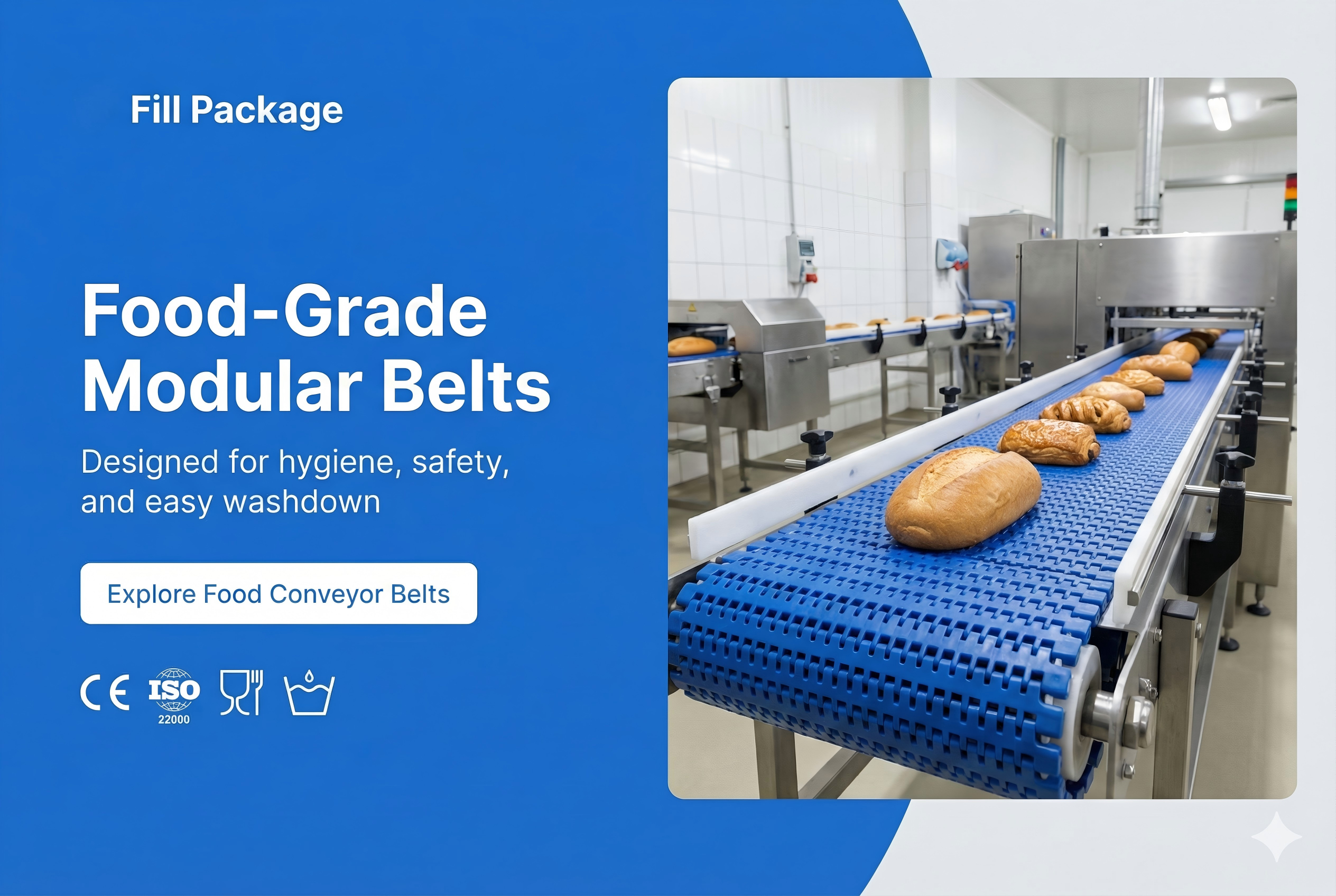
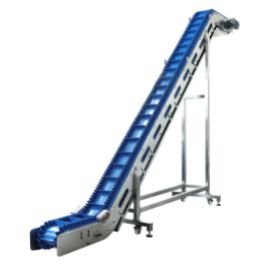
Los sistemas de transportadores de banda constituyen la columna vertebral de la mayoría de las líneas de envasado, ya que proporcionan un transporte horizontal fiable de los productos entre las distintas etapas de procesamiento. Son versátiles, rentables y están disponibles en una amplia gama de configuraciones para adaptarse a diferentes tipos de productos y diseños de planta. Nuestra gama incluye transportadores de banda plana para transporte general, transportadores de banda modular para cargas pesadas y diseños flexibles, transportadores inclinados y descendentes para cambios de elevación, transportadores de banda curva para sortear esquinas, bandas con tacos para pendientes pronunciadas y transportadores de acero inoxidable de grado alimenticio para entornos de lavado higiénico.
Si bien los transportadores de banda son esenciales, representan solo un componente de un sistema completo. Para explorar en profundidad cada tipo de banda, sus especificaciones técnicas y una guía detallada de aplicaciones, visite nuestra página dedicada a Transportadores de Banda.

Sistemas de alimentación y transporte inclinado: el corazón de su línea
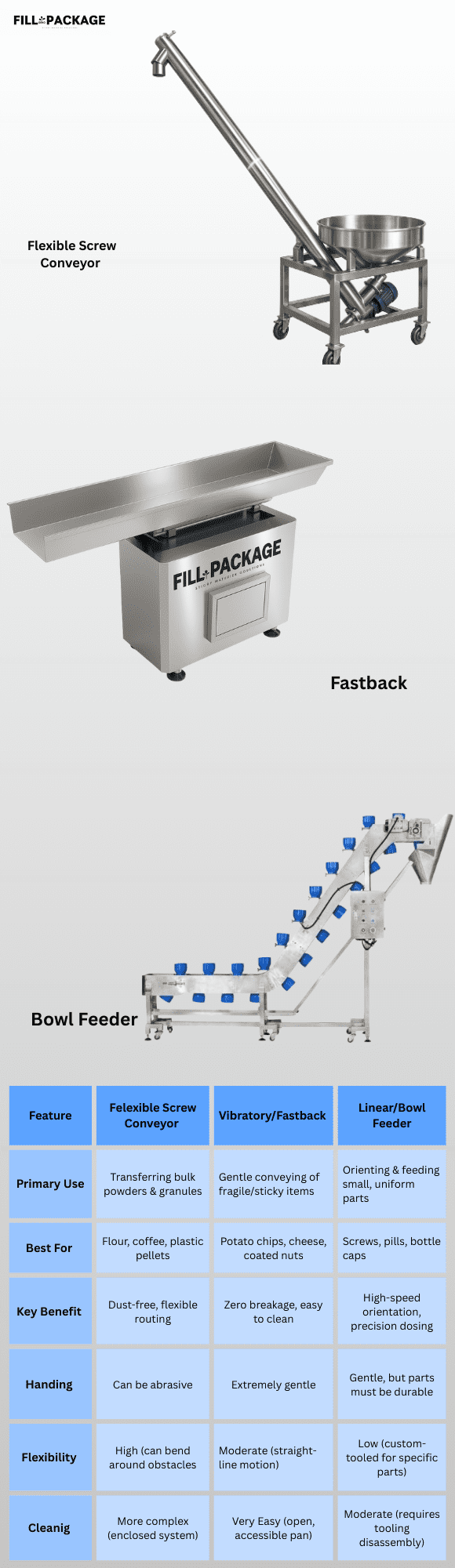
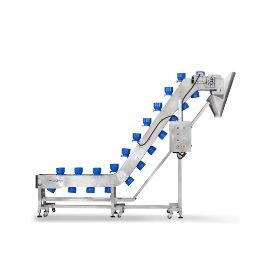
Mientras que los transportadores de banda se encargan del transporte horizontal, los sistemas de alimentación y transporte inclinado constituyen el latido vital de su línea de envasado. Dosifican con precisión, elevan y transfieren los materiales entre procesos, garantizando un flujo fluido, constante y controlado. Hacerlo bien en esta etapa es esencial para evitar el desabastecimiento en la pesadora o la sobrealimentación en la máquina VFFS, lo que impacta directamente en la Eficiencia Global de los Equipos (OEE).
Nuestros sistemas de alimentación están diseñados para manejar una amplia variedad de características de producto, desde aperitivos delicados y quebradizos hasta polvos pegajosos, húmedos o abrasivos. Nos centramos en una manipulación suave, una dosificación precisa y un diseño higiénico para proteger la integridad de su producto y maximizar el tiempo de actividad.
Transportador de tornillo flexible: el versátil caballo de batalla para polvos y gránulos
El transportador de tornillo flexible, a menudo llamado transportador de tornillo sinfín, es una solución altamente versátil y económica para transferir polvos, gránulos y otros sólidos a granel. Consiste en un tornillo en espiral que gira dentro de un tubo sellado, el cual desplaza el material desde la entrada hasta el punto de descarga. Su diseño cerrado lo convierte en una excelente opción para aplicaciones donde la contención de polvo y la higiene son primordiales.
Este sistema destaca en el manejo de polvos como harina, especias, leche en polvo, aditivos químicos y pigmentos. Es igualmente eficaz con gránulos como granos de café, pellets de plástico, semillas y granos pequeños. El requisito clave es que el producto no sea friable, es decir, que no se rompa ni se dañe fácilmente durante el proceso de transporte.
Las ventajas principales del transportador de tornillo flexible son convincentes. En primer lugar, ofrece un funcionamiento estanco al polvo. El tubo cerrado evita fugas de producto y polvo en suspensión, garantizando un entorno de trabajo limpio y seguro. En segundo lugar, proporciona un trazado flexible. El tubo flexible puede dirigirse alrededor de obstáculos, a largas distancias y en diversos ángulos, lo que ofrece una gran versatilidad de diseño. En tercer lugar, requiere un bajo mantenimiento. Con solo una pieza móvil—el tornillo—estos transportadores son simples, fiables y requieren un mantenimiento mínimo. Por último, es rentable, ya que ofrece una inversión inicial menor en comparación con otros sistemas de transporte como los transportadores neumáticos o aeromecánicos.
Transportador vibratorio y Fastback: manipulación suave para productos delicados y pegajosos
Los transportadores vibratorios, en particular el innovador transportador de movimiento horizontal Fastback, son el estándar de oro para el manejo de productos delicados, pegajosos o propensos a la segregación. En lugar de utilizar vibración agresiva, el sistema Fastback emplea un movimiento patentado de avance lento y retroceso rápido. Esto permite que el producto se deslice suavemente a lo largo de la bandeja sin rebotar, romperse ni perder los recubrimientos.
Las mejores aplicaciones para esta tecnología incluyen productos frágiles como papas fritas, galletas, galletas saladas, frutos secos y confitería. Es ideal para productos recubiertos y sazonados, ya que evita la pérdida de recubrimientos costosos y garantiza una distribución uniforme del sazonador. Los productos pegajosos como vegetales frescos cortados, queso y dulces de goma que se apelmazarían en una banda estándar también se benefician enormemente. Además, mantiene la integridad de las mezclas de productos, asegurando que los ingredientes premezclados permanezcan perfectamente combinados sin segregación.
Las ventajas son claras. En primer lugar, no hay roturas. El suave movimiento horizontal elimina el daño al producto, preservando la calidad y reduciendo el desperdicio. En segundo lugar, no hay segregación. Los productos mezclados permanecen perfectamente combinados desde el inicio de la línea hasta el final. En tercer lugar, es fácil de limpiar. La bandeja lisa y abierta no tiene grietas ni piezas móviles en la zona de producto, lo que permite una sanitización rápida y exhaustiva. Por último, ofrece capacidad de parada y arranque instantáneos. El control preciso del movimiento permite detener el flujo de producto de forma exacta e inmediata, lo cual es crucial para la alimentación de pesadoras multicabezal.
Alimentador vibratorio lineal y de tazón: dosificación precisa para componentes pequeños
Los alimentadores vibratorios lineales y de tazón están diseñados para la orientación precisa y la alimentación dosificada de componentes pequeños y uniformes. Un alimentador de tazón utiliza una pista espiral vibratoria para separar y orientar las piezas, entregándolas en una línea constante y de una sola fila. Un alimentador lineal luego transporta estas piezas orientadas a la siguiente etapa, como una máquina de conteo o una estación de ensamblaje
Estos sistemas son ideales para componentes de ferretería pequeños como tornillos, tuercas, pernos y arandelas para operaciones de preparación de kits. También son ideales para productos farmacéuticos, incluidas píldoras, tabletas y cápsulas para líneas de envasado de frascos. En la fabricación de electrónica, manipulan componentes pequeños para el ensamblaje automatizado. En el envasado, alimentan tapones de botella, tapas o cucharas dosificadoras con precisión.
Las ventajas principales incluyen la orientación de alta velocidad, que orienta automáticamente piezas de formas irregulares a una posición consistente para la automatización aguas abajo. Ofrecen una dosificación precisa, proporcionando un caudal fiable, controlable y preciso que evita atascos y garantiza la exactitud. Aportan eficiencia automatizada, reduciendo drásticamente la necesidad de mano de obra manual en la manipulación y clasificación de piezas, aumentando así el rendimiento. Por último, ofrecen una huella compacta, proporcionando una solución de alimentación de alta densidad en un espacio mínimo.
Cómo seleccionar el sistema transportador adecuado: guía paso a paso
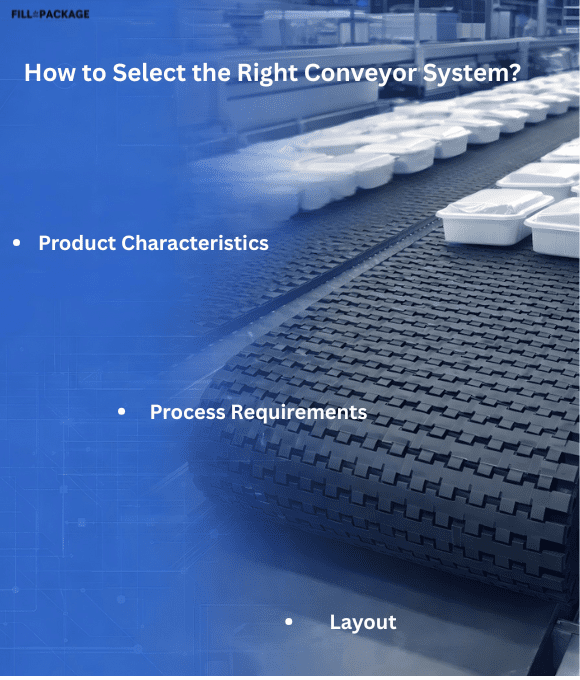
Elegir el sistema transportador óptimo es una decisión estratégica que impacta la eficiencia de toda su línea de producción. Un transportador inadecuado puede provocar daños al producto, cuellos de botella y un mantenimiento excesivo. Utilice esta guía para recorrer el proceso de selección y construir un sistema de manejo de materiales perfectamente alineado con sus productos, procesos y objetivos.
Paso 1: Analice las características de su producto
El producto en sí es el factor más importante. Comience por examinar la forma y el tamaño. ¿Es un polvo fino, un gránulo uniforme, un sólido delicado o un artículo de forma irregular? Los polvos y gránulos se manejan mejor con un transportador de tornillo flexible. Las piezas pequeñas y uniformes son ideales para un alimentador de tazón o lineal. La mayoría de los demás artículos funcionan bien con un transportador de banda o vibratorio.
A continuación, considere la fragilidad. ¿Se rompe, se desmenuza o se magulla fácilmente el producto? ¿Tiene un recubrimiento costoso? Los productos altamente frágiles o recubiertos requieren un transportador vibratorio Fastback para evitar roturas y pérdida de recubrimiento. Los productos moderadamente resistentes pueden manejarse con un transportador de banda estándar
Por último, evalúe la fluidez. ¿El producto fluye libremente, es pegajoso o tiende a apelmazarse? Los productos pegajosos o húmedos se benefician de un transportador vibratorio Fastback, que evita que se adhieran a la superficie. Los productos que fluyen libremente funcionan bien con un transportador de banda o de tornillo.
Paso 2: Defina los requisitos del proceso
Una vez que comprenda el producto, considere la función del transportador dentro de su línea. Para transferencia a granel, un transportador de banda o de tornillo es apropiado. Para elevación, se necesita un transportador de banda inclinado o un elevador de cangilones. Para dosificación o alimentación de precisión, un alimentador vibratorio o de tornillo es la opción correcta. Para orientación y clasificación, un alimentador de tazón es esencial.
También debe definir el rendimiento requerido. ¿Cuál es el volumen o peso objetivo por hora? Esto determinará el ancho, la velocidad y el tamaño del motor necesarios del transportador. Además, evalúe el entorno. En entornos de lavado o higiénicos, se requiere un transportador de banda o vibratorio de acero inoxidable. En entornos polvorientos, un transportador de tornillo flexible cerrado es la mejor opción.
Paso 3: Trace la distribución física
Por último, evalúe el espacio físico y la trayectoria. Considere el recorrido que debe seguir el producto. ¿Necesita moverse en línea recta, sortear esquinas o cambiar de elevación? El movimiento en línea recta es adecuado para transportadores de banda plana, vibratorios o de tornillo. Las esquinas requieren un transportador de banda curva. Las inclinaciones o descensos necesitan un transportador de banda inclinada o descendente, o un transportador de tornillo flexible.
Considere también el espacio disponible. ¿Cuánto espacio en el suelo hay disponible? En espacios limitados, un transportador de tornillo flexible puede dirigirse verticalmente y alrededor de obstáculos. Como alternativa, un elevador de cangilones proporciona una elevación vertical eficiente en un espacio reducido.
Al seguir sistemáticamente estos tres pasos, podrá identificar con confianza la tecnología de transporte más eficaz y eficiente para cada etapa de su proceso de envasado. Nuestro equipo de ingeniería está siempre disponible para brindarle asesoramiento experto y diseñar una solución totalmente integrada y adaptada a sus necesidades específicas.
Capacidades de integración de sistemas: la inteligencia detrás del flujo
Un sistema transportador es más que una colección de máquinas individuales. Es una red inteligente y coordinada que responde a las demandas de producción en tiempo real. Nuestras capacidades de integración garantizan que cada transportador, sensor y punto de control trabajen juntos a la perfección, creando una línea de producción unificada que maximiza la eficiencia y minimiza el tiempo de inactividad.
Sistemas de control basados en PLC
Diseñamos y programamos sistemas PLC (Controlador Lógico Programable) personalizados que actúan como el cerebro de su red de transportadores. Estos sistemas monitorean las entradas de los sensores, gestionan las velocidades de los motores y coordinan las secuencias de arranque y parada en múltiples transportadores. El resultado es una línea que se ajusta automáticamente a las condiciones cambiantes, evitando atascos y garantizando un flujo de producto fluido.
Comunicación y handshaking entre equipos
Nuestros sistemas transportadores están diseñados para comunicarse con su maquinaria de envasado existente, incluidos los dosificadores multicabezal, las envasadoras VFFS y las encajadoras. Utilizamos protocolos industriales estándar para crear handshakes electrónicos, garantizando que los transportadores arranquen y se detengan en función de las señales del equipo aguas arriba o aguas abajo. Esta coordinación elimina el desperdicio de producto y evita colisiones entre máquinas.
Amortiguación y acumulación inteligentes
Para gestionar paradas breves o variaciones en la velocidad de producción, incorporamos mesas de acumulación y transportadores de amortiguación en el sistema. Estas secciones retienen temporalmente una reserva de producto, lo que permite que los equipos aguas arriba sigan funcionando incluso cuando los equipos aguas abajo se detienen momentáneamente. Cuando la máquina aguas abajo vuelve a ponerse en marcha, la reserva se vacía automáticamente, manteniendo la eficiencia general de la línea.
Diseño higiénico para la inocuidad alimentaria
Para aplicaciones alimentarias, el diseño higiénico no es negociable. Nuestros transportadores de acero inoxidable cuentan con construcción de marco abierto para eliminar áreas ocultas donde pueden crecer bacterias, extracción sin herramientas de bandas y componentes para facilitar la limpieza, y superficies lisas libres de grietas. Todos los materiales son de grado alimenticio, y los sistemas están diseñados para soportar lavados a alta presión.
¿Por qué elegir Fill Package para la integración de su sistema transportador?
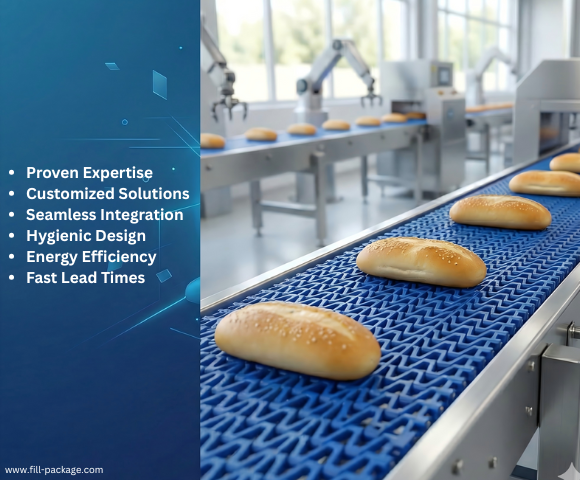
Experiencia comprobada en líneas de envasado: Nos especializamos en automatización de envasado, no solo en transportadores. Entendemos cómo el flujo de material impacta la precisión del pesaje, la velocidad de llenado y el rendimiento general de la línea.
Soluciones personalizadas, no productos de catálogo: Cada línea es diferente. Diseñamos cada sistema a la medida de sus productos, procesos y distribución de planta específicos.
Integración perfecta con equipos existentes: Nuestros sistemas están diseñados para funcionar con su maquinaria actual, ya sea una pesadora multicabezal, Máquina VFFSo una encajonadora.
Enfoque en diseño higiénico: Para aplicaciones alimentarias y farmacéuticas, priorizamos la facilidad de limpieza, los materiales de grado alimenticio y el cumplimiento de las normas del sector.
Soporte y servicio confiables: Ofrecemos instalación integral, capacitación y soporte técnico continuo para mantener su línea funcionando sin problemas.
Eficiencia energética: Nuestros sistemas de control se pueden programar para que los transportadores funcionen solo cuando haya producto presente, lo que reduce significativamente el consumo de electricidad durante las pausas de producción.
Plazos de entrega rápidos: Mantenemos stock de componentes comunes y trabajamos eficientemente para minimizar los plazos del proyecto.
Producto relacionado
Related Blogs :
2.Cómo diseñar un sistema transportador eficiente para líneas de envasado: una guía de ingeniería
3.Sistema de cintas transportadoras vs. Cintas transportadoras individuales: ¿Cuál es la diferencia?
Preguntas frecuentes (FAQ) sobre la integración de sistemas transportadores
Un “transportador” individual es un equipo que mueve materiales de un punto a otro, como un transportador de banda o un transportador de tornillo. Un “sistema transportador”, por otro lado, es una solución totalmente integrada que a menudo implica múltiples tipos de transportadores trabajando en conjunto. También incluye los controles, sensores y lógica necesarios (como PLCs) para gestionar el flujo de producto a lo largo de toda una línea de envasado. Un sistema está diseñado para resolver un desafío completo de manejo de materiales, no solo para mover un producto a lo largo de una única trayectoria.
Las transferencias fluidas son críticas para evitar daños al producto y atascos. Lo logramos mediante una ingeniería cuidadosa de los puntos de transferencia. Esto puede implicar el uso de barras de nariz de radio pequeño para transferencias ajustadas de productos pequeños, placas de transferencia motorizadas, o asegurar que la descarga de un transportador esté perfectamente posicionada sobre el extremo receptor del siguiente. Para productos delicados, utilizamos alimentadores vibratorios para distribuir suavemente el producto sobre el siguiente transportador, asegurando que no caiga ni se rompa.
Por supuesto. Nuestra principal experiencia radica en la integración de sistemas. Diseñamos nuestros sistemas de control de transportadores para que se comuniquen a la perfección con otras máquinas, como pesadoras multicabezal, envasadoras VFFS y encajonadoras. Utilizamos protocolos estándar de la industria y podemos personalizar los handshakes electrónicos para garantizar que nuestros transportadores arranquen y se detengan en función de las señales de sus equipos aguas arriba o aguas abajo, creando así una línea de producción verdaderamente unificada.
El OEE significa Eficiencia Global de los Equipos, una métrica clave para medir la productividad de fabricación. Multiplica la Disponibilidad (tiempo de funcionamiento), el Rendimiento (velocidad) y la Calidad (productos buenos). Un sistema transportador bien diseñado impulsa directamente los tres. Mejora la Disponibilidad al reducir atascos y tiempos de inactividad. Mejora el Rendimiento al alimentar el producto de manera constante a la velocidad óptima. Y aumenta la Calidad al manipular los productos con suavidad para evitar daños y desperdicio.
5. ¿Cómo manejan la acumulación y amortiguación de producto en un sistema transportador? La acumulación de producto es esencial para mantener la línea funcionando sin problemas, especialmente cuando hay una parada breve aguas abajo. Podemos incorporar mesas de acumulación o transportadores de amortiguación (a menudo utilizando bandas modulares de baja fricción) en el sistema. Estas secciones pueden retener temporalmente una reserva de producto, permitiendo que los equipos aguas arriba sigan funcionando durante un breve período. Cuando la máquina aguas abajo vuelve a ponerse en marcha, la reserva se vacía automáticamente.
Para aplicaciones alimentarias, el diseño higiénico no es negociable. Nuestros transportadores de acero inoxidable están construidos con esto en mente. Las características clave incluyen construcción de marco abierto para eliminar áreas ocultas donde pueden crecer bacterias, extracción sin herramientas de bandas y componentes para facilitar la limpieza, y superficies lisas y libres de grietas. Todos los materiales son de grado alimenticio, y el sistema está diseñado para soportar lavados a alta presión.
El consumo de energía depende de la longitud total, la carga y el número de motores del sistema. Sin embargo, priorizamos la eficiencia energética en nuestros diseños. Utilizamos motores y reductores de alta eficiencia. Más importante aún, nuestros sistemas de control se pueden programar para que los transportadores funcionen solo cuando haya producto presente (funcionamiento bajo demanda), lo que reduce significativamente el consumo de electricidad durante las pausas de producción en comparación con los sistemas que funcionan de forma continua.
Diseñamos nuestros sistemas para un bajo mantenimiento. Las tareas más comunes son la inspección periódica de la tensión y alineación de la banda, la verificación de la lubricación del reductor y asegurar que los sensores estén limpios. Para nuestros transportadores vibratorios Fastback, prácticamente no hay piezas móviles en la zona de producto, lo que los hace extremadamente bajos en mantenimiento. Proporcionamos un programa de mantenimiento detallado y un manual con cada sistema que entregamos.
Este es un desafío común, especialmente con mezclas de partículas de diferentes tamaños (como una mezcla de frutos secos y pasas). La mejor solución para esto es un transportador de movimiento horizontal Fastback. Su suave acción de deslizamiento no vibratoria mueve todo el lecho de producto como una unidad, asegurando que la proporción de la mezcla se mantenga constante desde el inicio de la línea hasta el envasado.
El plazo de entrega varía según la complejidad del sistema. Un transportador simple e individual podría estar listo en unas pocas semanas. Un sistema integrado grande con múltiples transportadores y controles personalizados puede tardar varios meses. El proceso incluye una fase detallada de diseño y aprobación antes de que comience la fabricación. Trabajamos estrechamente con usted para establecer un cronograma claro desde el principio y mantenerle informado durante todo el proyecto.
¿Está listo para optimizar el flujo de materiales?
Contacte hoy a nuestro equipo de ingeniería para hablar sobre sus necesidades específicas de sistemas transportadores. Trabajaremos con usted para diseñar una solución que maximice la eficiencia, proteja la calidad del producto y se integre a la perfección con su línea de envasado existente.