

Flat top chains are widely used in automated packaging and conveying systems where stable and reliable product transfer is required. One of the most important decisions when selecting flat top chains is choosing the correct material.
The two most commonly used materials are plastic flat top chains Ve stainless steel flat top chains. Each material offers distinct advantages depending on the operating environment, product type, and packaging line requirements.
Understanding the differences between these two materials helps manufacturers improve system reliability and optimize long-term operational performance.
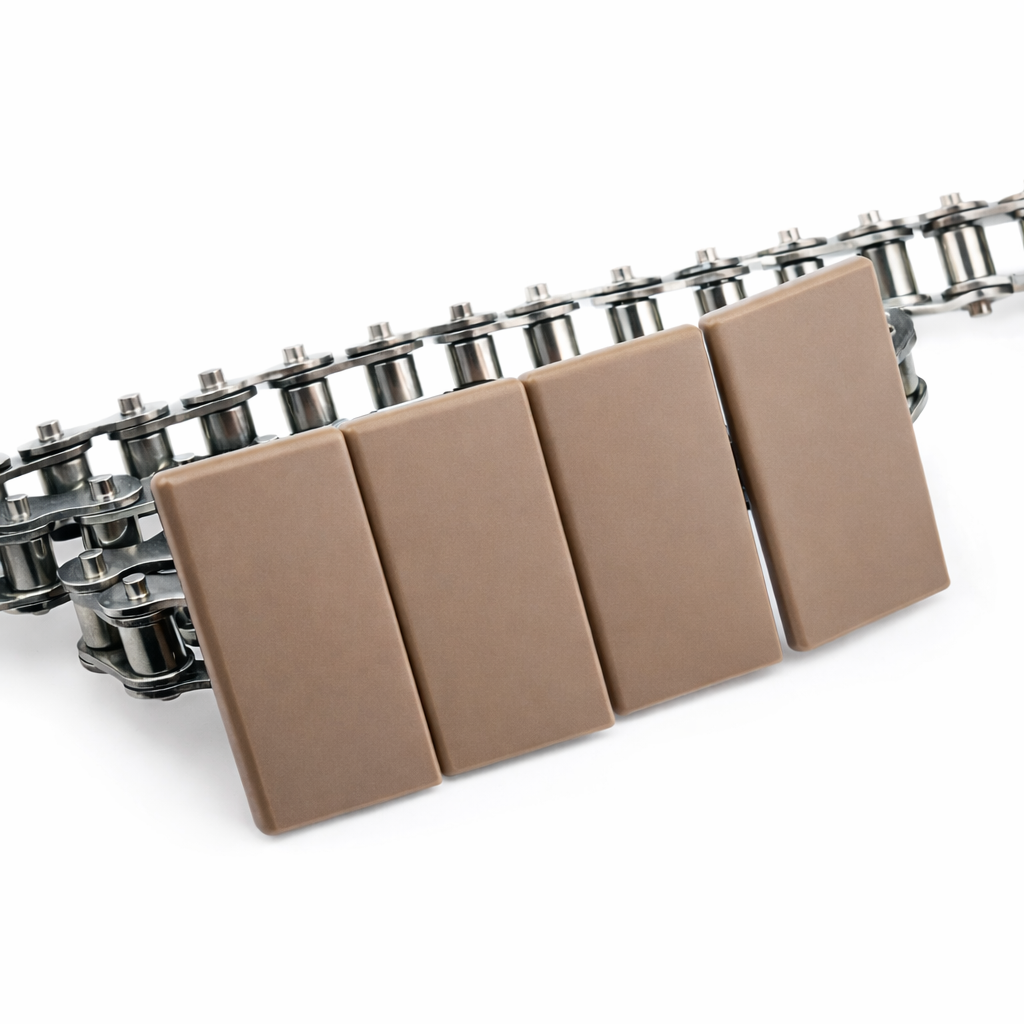
Overview of Flat Top Chain Materials
Flat top chains—also referred to as slat top chains or tabletop chains—are designed to create a rigid conveying surface that supports stable product movement across packaging lines.
Material selection plays a critical role in determining:
Durability and wear resistance
Compatibility with production environments
Maintenance requirements
Long-term operating stability
Plastic and stainless steel flat top chains are both widely used, but they serve different application needs.
Advantages of Plastic Flat Top Chains
Plastic flat top chains are commonly used in packaging lines that require smooth and controlled product handling.
Lightweight and Low Friction Operation
Plastic chains typically provide lower friction between the conveying surface and products. This helps reduce product movement resistance and supports stable high-speed conveying in packaging applications.
Suitable for Food and Beverage Packaging
Plastic flat top chains are widely used in food production environments where conveying components must meet hygiene and cleaning requirements. Their smooth surface helps maintain clean conveying conditions.
Reduced Noise and Smooth Operation
Compared with metal chain systems, plastic flat top chains typically operate with lower noise levels. This can improve working conditions in production environments and support stable continuous operation.
Advantages of Stainless Steel Flat Top Chains
Stainless steel flat top chains are commonly selected for demanding industrial environments where durability and environmental resistance are critical.
High Temperature and Harsh Environment Resistance
Stainless steel flat top chains are well suited for applications involving elevated temperatures or environments exposed to chemicals and corrosion.
Higher Structural Strength and Load Capacity
Metal chain construction generally provides higher structural strength, making stainless steel flat top chains suitable for applications requiring heavy product conveying or increased mechanical durability.
Long-Term Durability in Industrial Applications
Stainless steel flat top chains are frequently used in heavy-duty conveying environments where long-term performance and resistance to wear are essential.
Environmental and Operational Considerations
Selecting between plastic and stainless steel flat top chains requires careful evaluation of operating conditions.
Plastic flat top chains are typically preferred when:
Hygiene and cleanability are important
Production lines operate at high speed
Products are lightweight or medium weight
Lower operational noise is preferred
Stainless steel flat top chains are typically preferred when:
Conveying environments involve high temperatures
Production environments involve corrosive substances
Applications require heavy load handling
Mechanical durability is a priority
Maintenance and Service Life Comparison
Both plastic and stainless steel flat top chains are designed for continuous operation, but their maintenance requirements differ depending on operating conditions.
Plastic flat top chains are often easier to handle and may reduce wear caused by product friction. They are commonly selected for packaging lines requiring stable high-speed conveying with regular cleaning cycles.
Stainless steel flat top chains typically offer strong mechanical durability and are used in applications where environmental resistance and long-term structural reliability are critical.
Proper chain selection and maintenance planning help improve overall conveyor system performance and service life.
Which Material Is the Right Choice?
Choosing the correct flat top chain material depends on a combination of factors, including:
Ürün tipi ve ağırlığı
Production environment and cleaning requirements
Line speed and conveyor layout
Long-term durability and maintenance goals
Carefully evaluating these factors helps ensure the selected conveying solution supports stable and efficient packaging operations.
Explore Flat Top Chain Material Options
Selecting the correct flat top chain material plays a key role in achieving reliable packaging line performance.
👉 Learn more about Plastic Flat Top Chains for food, beverage, and high-speed packaging applications
👉 Discover Stainless Steel Flat Top Chains for demanding industrial and heavy-duty environments
👉 Explore Flat Top Chains for Packaging Lines to understand complete conveying solution
👉Know more about Spiral Conveyor Chains