

giriiş
A VFFS forming shoulder looks like a simple curved piece of stainless steel. In practice, it is a precision geometry problem — and getting it wrong means constant film breaks, back-seal wrinkles, and unplanned line stops that are expensive to diagnose and slow to fix.
This article covers the engineering decisions that determine whether a forming shoulder runs smoothly for two years or causes daily headaches. If you are designing a new VFFS machine, specifying a replacement, or evaluating a supplier, this is the framework to use.
New to forming sets? Start with our overview: What Is a VFFS Bag Forming Set and How Does It Work?
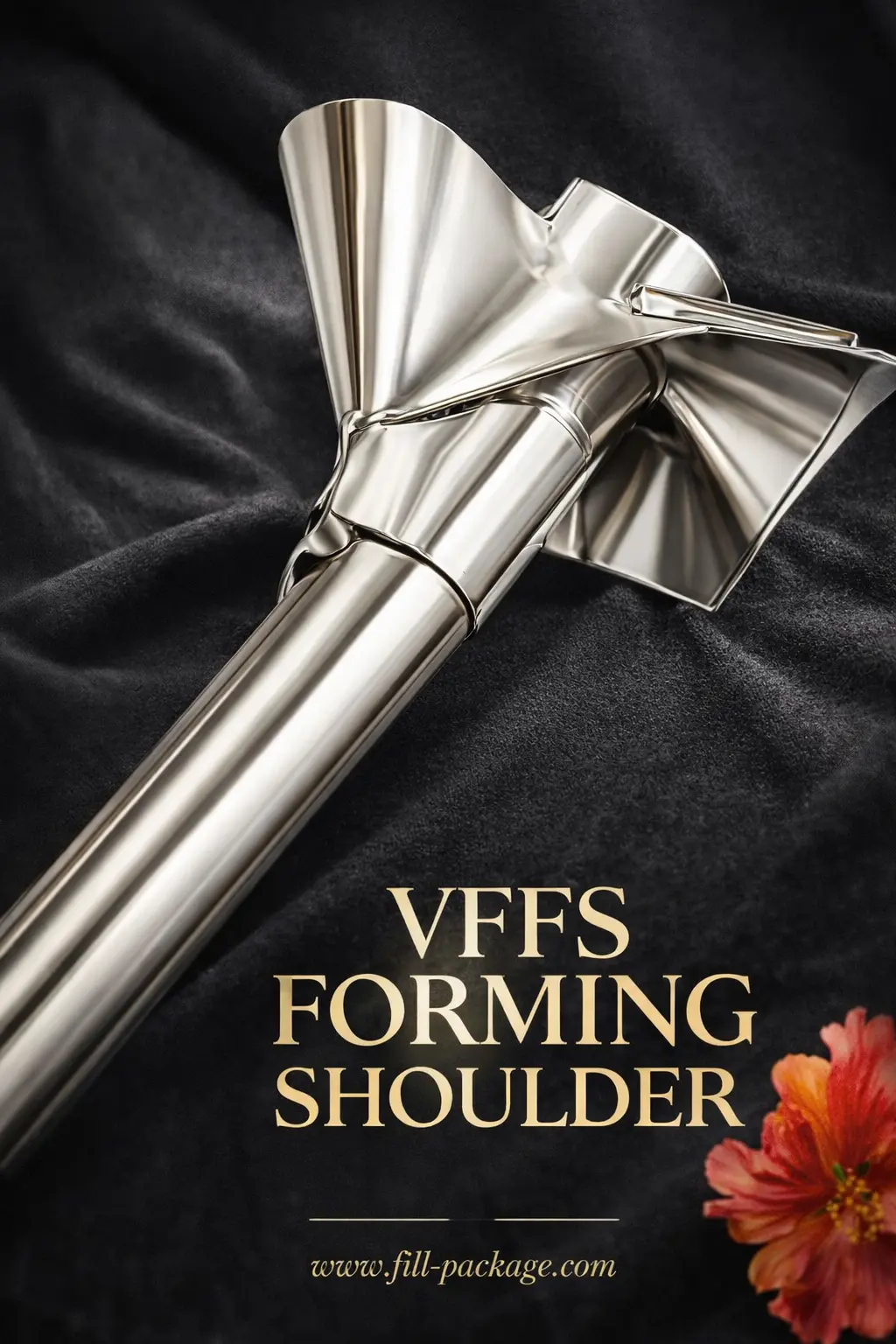
1. The Core Geometry: Film Width to Bag Width
The most fundamental parameter is the relationship between film width and target bag width. For a standard fin-seal pillow bag:
Film width = 2 × bag width + seam allowance (typically 10–20mm)
The forming shoulder must curve the flat film into a tube of exactly the right circumference. Too wide: the film has slack and wrinkles. Too narrow: you generate tension that causes stretch or tears — particularly with thin PE or metalized films.
The shoulder angle — the steepness of the curve as the film transitions from flat to wrapped — is the most critical variable. A shoulder that is too abrupt creates a sharp bend with high local tension. Too gradual, and the film loses direction before reaching the tube.
Rule of thumb: the thinner and stiffer the film, the gentler the shoulder angle must be.
2. Surface Finish and Friction Control
Film tension across the forming shoulder is a direct function of friction. There are three failure modes every designer must account for:
- High static friction on the outer surface: causes film to stick-slip, common with thin OPP or transparent PE films in low-humidity environments.
- Material accumulation on the inner surface: fine powders coat the inside of the forming tube, creating an uneven surface that disrupts film flow.
- Abrasion at the shoulder leading edge: the point where film first contacts the shoulder wears fastest. A rough or sharp edge here scores the film surface, leading to seal delamination or print registration errors.
Our workshop addresses these with three levels of Teflon treatment — outer spray for film friction, inner spray for powder adhesion, and full treatment for both. We also offer mirror-polished stainless (Ra ≤ 0.4 μm) as standard, with sand-blasted finishes where a controlled grip is needed to prevent film drift.
3. Material Selection
Food-grade 304 stainless steel is the baseline. Key reasons:
- Excellent corrosion resistance for washdown environments
- Smooth, finishable surface for low friction
- Adequate fatigue strength for the repetitive flex cycle in trunk-style formers
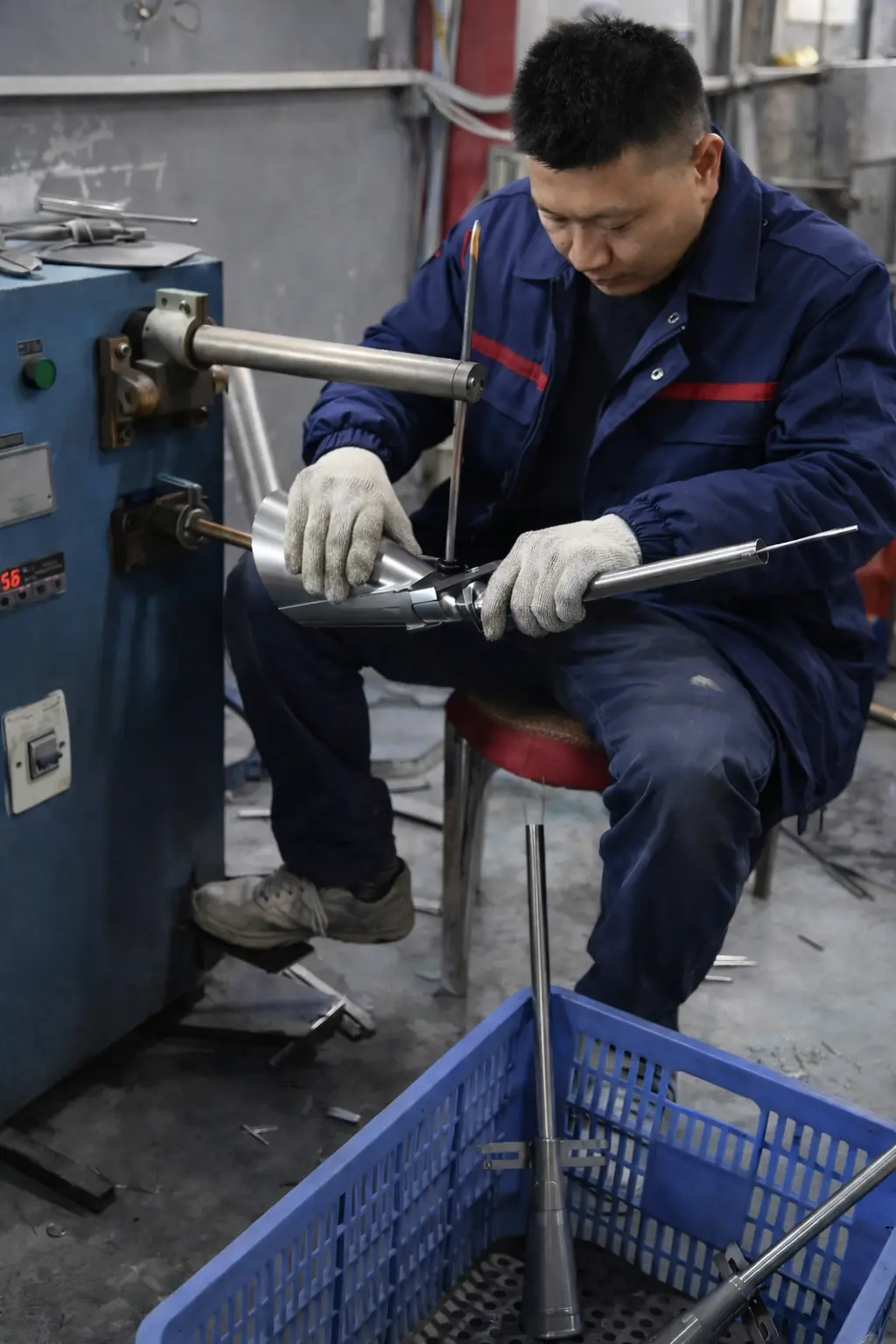
316L stainless is specified for high-chloride environments (salt, seafood) or pharmaceutical-grade cleanliness requirements.
For high-speed lines above 200 bags/min, where the forming tube experiences continuous vibration, we use a heat-treated stainless alloy with improved fatigue resistance — particularly important for flexible trunk-style designs.
4. Key Dimensions to Specify
| Parametre | What It Defines | Tipik Aralık |
| Film width | Roll width entering the machine | 35mm – 800mm |
| Bag width | Final bag width after sealing | Derived from film width and seam type |
| Bag style | Pillow, gusseted, quad-seal, flat-bottom, triangle | Determines shoulder cross-section profile |
| Tube outlet diameter | Must match the machine’s filling nozzle | Machine-specific |
| Shoulder height | Vertical depth of the shoulder assembly | Machine mounting-specific |
| Mounting interface | How the shoulder attaches to the machine frame | OEM-specific; drawings required |
When you send us your machine model and target bag specifications, our engineers produce a full drawing for your confirmation before any machining begins. This eliminates the most common source of error in custom forming shoulder orders: dimensional mismatches discovered only after delivery.
5. Gas Flushing and Dust Extraction Integration
Nitrogen gas flushing: For modified atmosphere packaging (MAP) — coffee, snacks, oxygen-sensitive products. A small tube is routed inside the forming tube to inject nitrogen before sealing. This affects forming tube bore diameter and wall thickness and must be designed in from the start.
Dust extraction ports: For fine powders that generate airborne particles during filling, a suction port integrated into the shoulder assembly captures dust before it reaches the seal zone. Critical for pharmaceutical and nutraceutical applications where seal integrity is a compliance requirement.
6. Validation and Run-In Protocol
Every forming shoulder we manufacture goes through a dimensional inspection against the confirmed drawing, followed by a surface roughness check on all film-contact faces. Flexible trunk-style formers are fatigue-tested before shipment.
We recommend a run-in protocol for new forming shoulders: operate at 50% speed for the first 500 cycles to allow micro-surface settling before full production speed.
What happens when a forming shoulder ages? A well-designed shoulder runs cleanly — but every forming shoulder degrades over time. Knowing the warning signs before failure is expensive is the practical follow-on to this design guide. Read: 5 Signs It’s Time to Replace Your VFFS Bag Former. Or, if you have a specification ready, visit our VFFS Bag Former page and send us your machine model and film width — our engineers will review your drawings for free before production begins.