
Конвейерная роликовая цепь для элеваторов Z-типа | Серия C2052
Конвейерная цепь из нержавеющей стали для ковшовых элеваторов
Обзор
Когда трос Z-образного ковшового элеватора выходит из строя, останавливается вся упаковочная или перерабатывающая линия. Вытяжение цепи, перескакивание зубьев и трещины в пластинах звеньев — это не случайные отказы оборудования. Это предсказуемые события технического обслуживания, которые происходят, когда цепь отработала свой срок службы, или когда изначально была установлена цепь неправильной спецификации.
Наш основной продукт — роликовая цепь с двухшаговым шагом C2052-PF1-D3F30 — стандартная спецификация цепи для элеваторов Z-типа, используемых в пищевой упаковке, подаче мультиголовочных весов и промышленных производственных линиях по всему миру. Изготовленная в соответствии со стандартами ANSI B29.1 с роликами из полиамида PA6 или нержавеющей стали 304 по вашему выбору, это спецификация цепи, на которую ориентируется большинство китайских OEM-производителей элеваторов Z-типа при создании своих систем.
Обладая более чем 30-летним опытом в производстве промышленных роликовых цепей и поставках модели 80% на внутренний рынок Китая, мы поставляем цепи, используемые в большинстве эскалаторов типа Z, выпускаемых в настоящее время, а также предоставляем техническое подтверждение, необходимое большинству покупателей-производителей оригинального оборудования перед размещением крупного заказа на замену.
Почему стоит выбрать нашу конвейерную цепь из нержавеющей стали?
Выбор правильного конвейерная цепь Поставщик — это не просто сравнение цен. Речь идёт о долгосрочной эффективности, надёжности и качественном обслуживании. Вот почему тысячи клиентов по всему миру доверяют нам свои услуги. роликовые цепи из нержавеющей стали и цепь ковшового элеватора потребности:
- Более 30 лет опыта
Мы занимаемся производством промышленные роликовые цепи более трех десятилетий уделяя особое внимание производительности, точности и долговечности. - Доля рынка 80% в Китае
Мы являемся ведущим цепь ковшового элеватора производитель, обеспечивающий большую часть внутреннего рынка и экспортирующий по всему миру. - Доступны OEM и ODM-решения
Индивидуальный дизайн, особые насадки и упаковка под собственной торговой маркой — мы поддерживаем ваш бизнес на каждом этапе пути. - Быстрая доставка и глобальная поддержка
От срочных проектов до плановых внедрений — наше гибкое производство и глобальная логистика гарантируют, что вы получите то, что вам нужно, тогда, когда вам это нужно. - Совместимость со всем ассортиментом продукции
Мы предлагаем полную линейку конвейерные роликовые цепи, соответствующие звездочки, насадки и аксессуары — все под одной крышей. - Надежное послепродажное обслуживание
Наша команда инженеров работает круглосуточно и без выходных, чтобы ответить на ваши технические вопросы, дать рекомендации по установке и предложить решения по долгосрочному техническому обслуживанию.

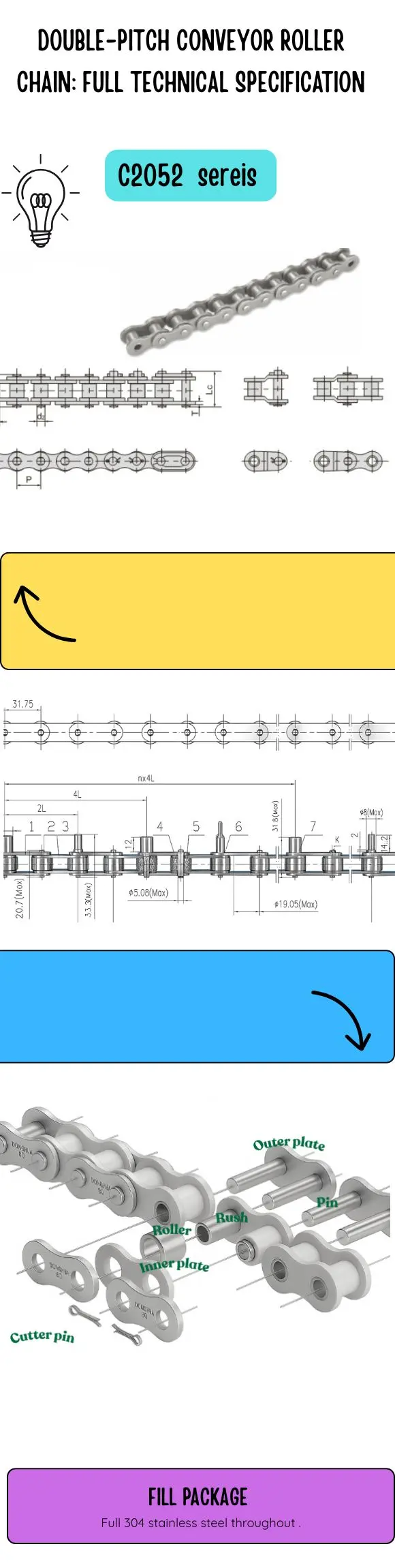
C2052 Двухшаговая конвейерная роликовая цепь: полная техническая спецификация
Ключевые параметры и данные по производительности
Модель: C2052-PF1-D3F30 (рыбья чешуя / цепь "рыбья чешуя") — наиболее часто поставляемая цепь конвейерных роликов для элеваторных систем Z-типа.
| Параметр | Ценить | Стандарт / Примечание |
| Цепочечная модель | C2052-PF1-D3F30 | ANSI B29.1 — двойная цепь |
| Подача | 31,75 мм | Серия с двойным шагом |
| Диаметр ролика | ø19.05 мм (Макс.) | ПА6 нейлон или нержавеющая сталь 304 (см. раздел роликов) |
| Диаметр штифта | ø5.08 мм (макс.) | — |
| Зазор внутренней пластины | 9,4⁺⁰·⁴ мм | — |
| Толщина наружной пластины | 2,03 мм | — |
| Высота пластины цепи | 13,84 мм (макс.) | — |
| Минимальная прочность на разрыв | 21.8 кН | Согласно стандарту ANSI B29.1 |
| 21-звено измеренная длина | 666,75 мм ±1 мм | При измерительной нагрузке 200 Н — заводской стандарт контроля качества |
| Внешняя пластина запрессована | F_наружная > 1,377 Н | — |
| Внутренняя пластина запрессована | F_inner > 995 Н | — |
| Макс. угол скручивания | 4° на метр | — |
| Допуск сопряжения | ±0,051 TP3T | Цепи, поставляемые в подобранных парах |
Альтернативный текст изображения “C2052 двухшаговая цепь конвейерного ролика технический чертеж нории Z-тип”
Спецификация
| Часть | Компонент | Материал | Примечания |
| Наружная пластина | Внешняя ссылка | Сталь 45Г | Высокопрочная марганцевая сталь |
| Штифт цепи | Однорядный цепной вал | 20ХН3А — никелированное | Сплав Cr-Mo; никелированное покрытие для коррозионной стойкости |
| Внутренняя пластина | Внутренняя связь | Сталь 45Г | — |
| Втулка | гильза | 20Mn сталь | — |
| Ролик | Ролик | ПА6 нейлон ИЛИ 304 нерж. сталь | Смотрите раздел выбора роликов ниже |
| Вытянутый пин А | Удлиненная ось А | 20ХН3А — никелированное | Для крепления зажима ковша |
| Расширенный пин B | Удлиненный штифт B | 20ХН3А — никелированное | Для крепления зажима ковша |
| Соединительный пин | Соединительный штифт | 20ХН3А — никелированное | Звено цепи |
| Шплінт | Шплинт | ГБ/Т 91 — 1,6×10 | Стопорный штифт |
Почему никелированные штыри — а не полностью из нержавеющей стали
Никелированная шпилька из легированной стали 20CrMnMo является намеренным выбором спецификации, который обеспечивает баланс между коррозионной стойкостью и механическими характеристиками:
- Более высокая прочность на разрыв и усталость по сравнению с нержавеющей сталью 304 — легированная сталь 20CrMnMo обладает значительно более высокой твердостью и сопротивлением усталости по сравнению с нержавеющей сталью 304 при диаметре пальца, используемом в цепи C2052
- Никелевое покрытие обеспечивает достаточную коррозионную стойкость для пищевых производств — подходит для условий влажного воздуха и промывки струей воды
- Более экономичным, чем полностью из нержавеющей стали 304, что делает C2052-PF1-D3F30 наилучшей по соотношению цена-качество спецификацией для большинства применений Z-элеваторов в пищевой упаковке
Для применений, требующих полного использования нержавеющей стали 304, включая штифт, втулку и пластину, мы поставляем полностальную версию. Свяжитесь с нами для получения спецификаций и цен.
Нейлоновый Ролик против Ролика из Нержавеющей Стали: Какой выбрать
Конвейерная роликовая цепь C2052 доступна с двумя вариантами роликов. Ролик контактирует с несущими роликами и направляющими внутри корпуса подъемника, а выбор между нейлоном и нержавеющей сталью влияет на шум, плавность хода, стоимость обслуживания и грузоподъемность таким образом, что эти факторы имеют разное значение в зависимости от вашего применения.
Ролик из полиамида 6 — Стандарт для упаковочных линий
Нейлон является стандартной спецификацией для подавляющего большинства применений упаковочных линий для пищевых продуктов, и причина этому — не стоимость. Это производительность. Упаковочные линии имеют совершенно иной набор приоритетов по сравнению с промышленной транспортировкой сыпучих материалов:
- Плавное, стабильное перемещение продукции — мешки, пакеты и коробки не должны подпрыгивать или смещаться во время транспортировки
- Низкий уровень шума — на многих пищевых фабриках работают две или три смены, и тихая линия является эксплуатационным требованием
- Без повреждений поверхности — печатная упаковочная пленка и готовая продукция не должны иметь царапин или следов.
- Высокая надежность — упаковочные линии работают непрерывно на таких скоростях, что любое нарушение в движении цепи создает проблемы на последующих этапах
Ролики из полиамида 6 обеспечивают выполнение всех четырех требований. Низкий коэффициент трения обеспечивает плавное движение на высоких скоростях. Контакт между нейлоновым роликом и нейлоновым опорным роликом тихий — на 8–12 дБ тише, чем при контакте стали со сталью при эквивалентных скоростях цепи. А естественная смазывающая способность нейлона означает, что смазка в точке контакта ролика не требуется, что исключает риск загрязнения на линиях упаковки пищевых продуктов.
| Приложение | Почему нейлоновый ролик |
| Линии упаковки снековой продукции (чипсы, орехи, сухие завтраки) | Плавное движение предотвращает подпрыгивание сумки; низкий уровень шума имеет решающее значение |
| Конвейер отвода упаковочной машины вертикального формования, наполнения и запайки | Скорость высокая, печатная пленка не должна быть поцарапана |
| Многоголовочный дозатор → конвейер → линия упаковки в коробки | Стабильное позиционирование продукта во всех точках передачи |
| Транспортировка картонных и пластиковых лотков | Низкий износ направляющих снижает затраты на техническое обслуживание |
| Упаковка порошка (ВФФС, окончание) | Отсутствие вибрации, влияющей на точность дозирования весового дозатора |
| Ковшовый элеватор Z-типа (для легких продуктов) | Шумоподавление; самосмазывающийся роликовый контакт |
304 Нержавеющая Сталь Ролик — Для Тяжелых, Влажных или Холодных Применений
Ролики из нержавеющей стали предписываются, когда условия нагрузки, влажности или температуры превышают те, которые нейлон может надежно выдерживать. Ролик из нержавеющей стали имеет более высокую грузоподъемность и не подвержен воздействию погружения, конденсации или температур ниже нуля, которые могут сделать нейлон хрупким или вызвать преждевременный износ.
Компромисс: контакт нержавеющей стали с нержавеющей сталью громче и создает больше вибраций, чем контакт нейлона с нейлоном. Для применений, где приоритетом являются грузоподъемность и устойчивость к промывке, это приемлемо. Для упаковочных линий, где важны плавность хода и низкий уровень шума, это неприемлемо.
| Приложение | Почему нержавеющая сталь? |
| Ковшовый элеватор Z-типа (тяжелые материалы) | Более высокая нагрузка на ковш, чем та, которую может надежно обеспечить нейлон |
| Свежие морепродукты и мясо, передающие | Влажный + тяжелый продукт; частая мойка под высоким давлением |
| Обращение с замороженными продуктами | Низкие температуры могут вызвать охрупчивание полиамида ПА6 под нагрузкой |
| Подача сырья (не готовой упаковки) | Приоритет загрузки над шумом; меньшее беспокойство о повреждении поверхности |
| Фармацевтические среды для промывки | Полное погружение для очистки; нейлон впитывает влагу |
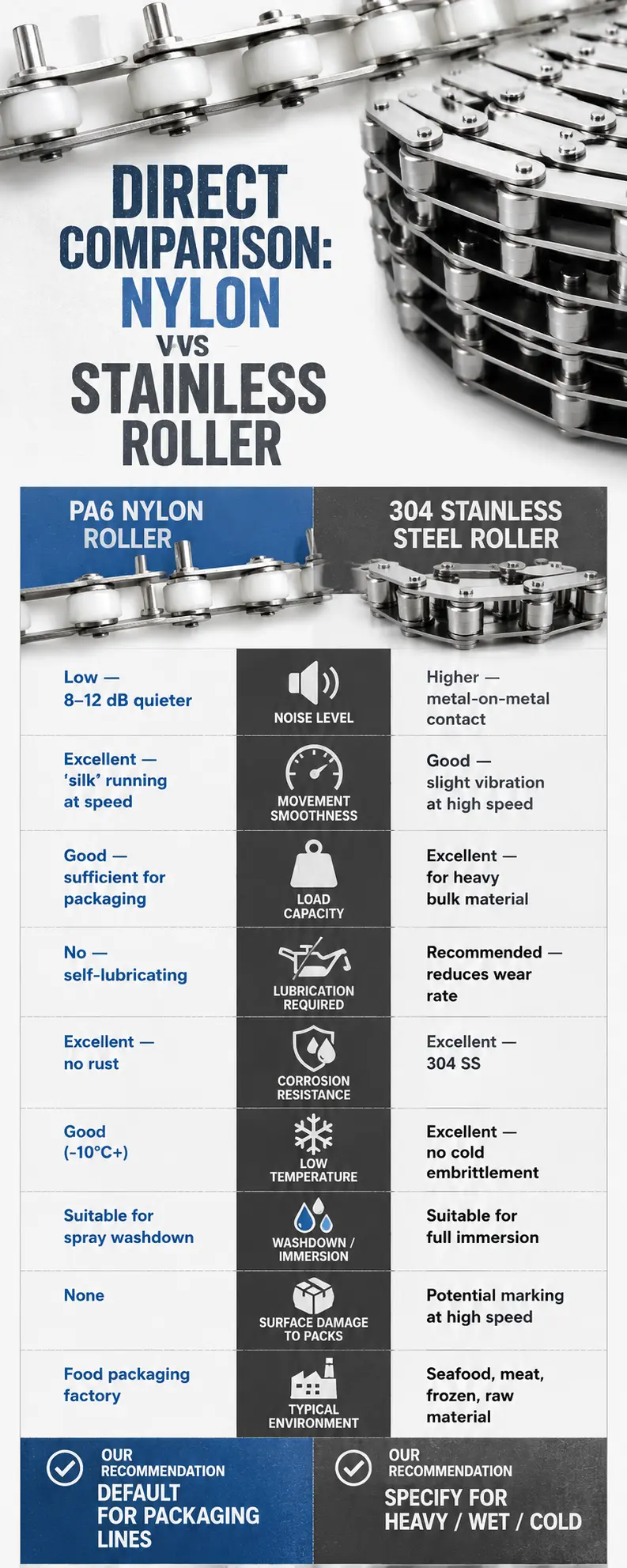
Прямое сравнение: нейлоновый против нержавеющего ролика
| Ролик из полиамида 6 | Ролик из нержавеющей стали 304 | |
| Уровень шума | Низкий — на 8–12 дБ тише | Выше — контакт металл по металлу |
| Плавность движения | Отлично — ‘шелк’ на скорости | Хорошо — легкая вибрация на высокой скорости |
| Грузоподъемность | Хорошо — достаточно для упаковки | Отлично — для сыпучих тяжелых материалов |
| Требуется смазка | Нет — самосмазывающийся | Рекомендуется — снижает скорость износа |
| Коррозионная стойкость | Отлично — нет ржавчины | Отлично — 304 SS |
| Низкая температура (-10°C+) | Хороший | Отлично — никакого охрупчивания |
| Промывка / погружение | Подходит для промывки распылением | Подходит для полного погружения |
| Повреждение поверхности упаковки | Никто | Потенциальная маркировка на высокой скорости |
| Типичная среда | Фабрика пищевой упаковки | Морепродукты, мясо, замороженное, сырье |
| Наша рекомендация | ✅ По умолчанию для упаковочных линий | ✅ Уточните для тяжелых / влажных / холодных |
Краткое руководство по выбору: Если ваша линия выпускает пакеты, мешки, картонные коробки или любые готовые упаковочные изделия — укажите нейлоновый ролик. Если ваша линия предназначена для сыпучих материалов, свежего или замороженного мяса/морепродуктов или требует полной очистки погружением — укажите ролик из нержавеющей стали. В случае сомнений отправьте нам фотографию вашей существующей цепи и описание рабочей среды. Мы подтвердим правильную спецификацию ролика в течение 24 часов.
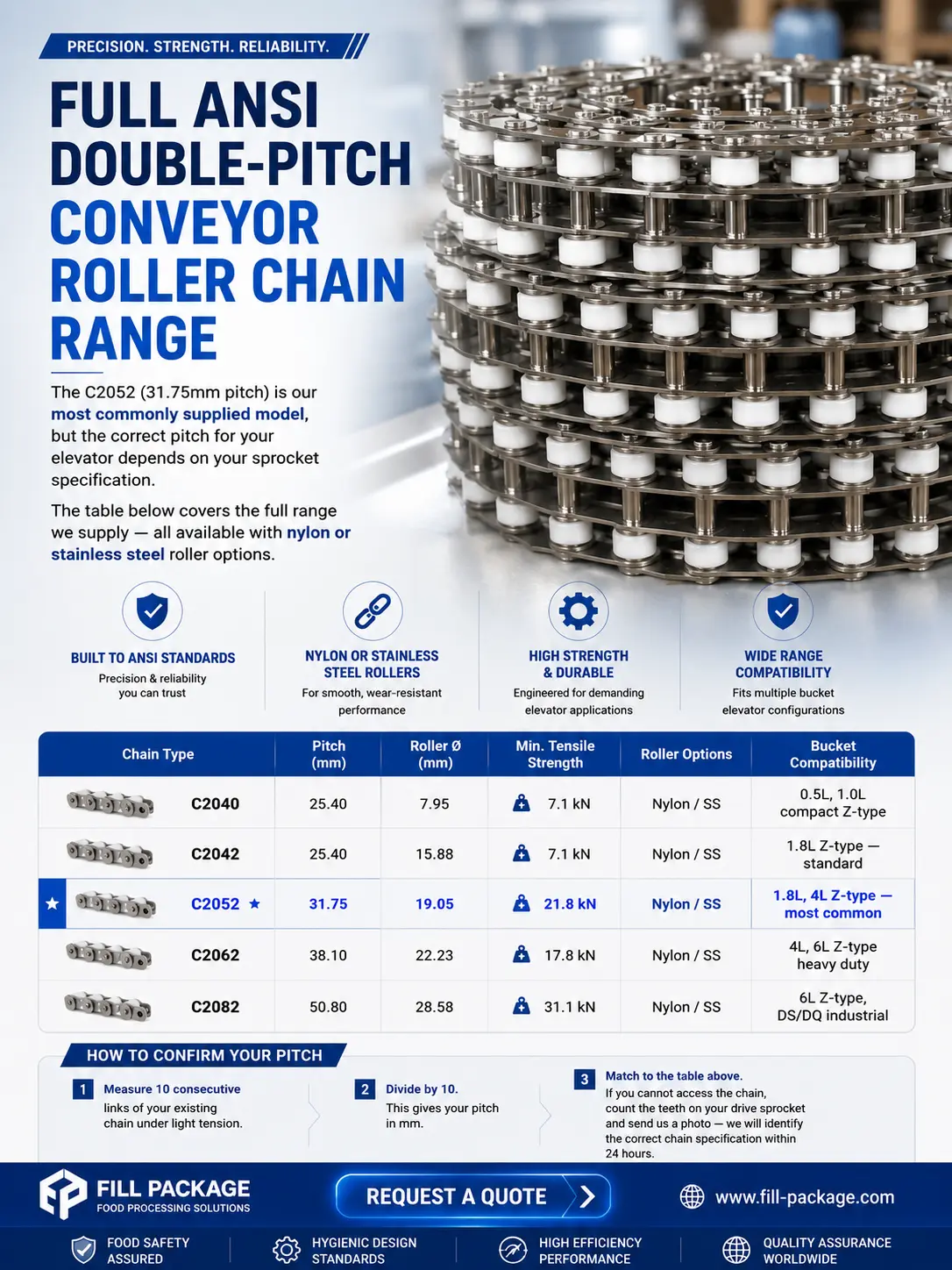
Полный ассортимент цепей роликовых конвейерных ANSI Double-Pitch
C2052 (шаг 31,75 мм) – это наша самая часто поставляемая модель, но правильный шаг для вашего лифта зависит от спецификации вашей звездочки. Приведенная ниже таблица охватывает весь ассортимент, который мы поставляем — все доступные с нейлоновыми или нержавеющими роликами.
| Тип цепи | Шаг (мм) | Ролик Ø (мм) | Минимальная предел прочности | Roller Options | Bucket Compatibility |
| C2040 | 25.40 | 7.95 | 7.1 kN | Nylon / SS | 0.5L, 1.0L compact Z-type |
| C2042 | 25.40 | 15.88 | 7.1 kN | Nylon / SS | 1.8L Z-type — standard |
| C2052 ★ | 31.75 | 19.05 | 21.8 кН | Nylon / SS | 1.8L, 4L Z-type — most common |
| C2062 | 38.10 | 22.23 | 17.8 kN | Nylon / SS | 4L, 6L Z-type heavy duty |
| C2082 | 50.80 | 28.58 | 31.1 kN | Nylon / SS | 6L Z-type, DS/DQ industrial |
How to confirm your pitch: Measure 10 consecutive links of your existing chain under light tension. Divide by 10. This gives your pitch in mm. Match to the table above. If you cannot access the chain, count the teeth on your drive sprocket and send us a photo — we will identify the correct chain specification within 24 hours.
Complete Z-Type Elevator System: Matched Components
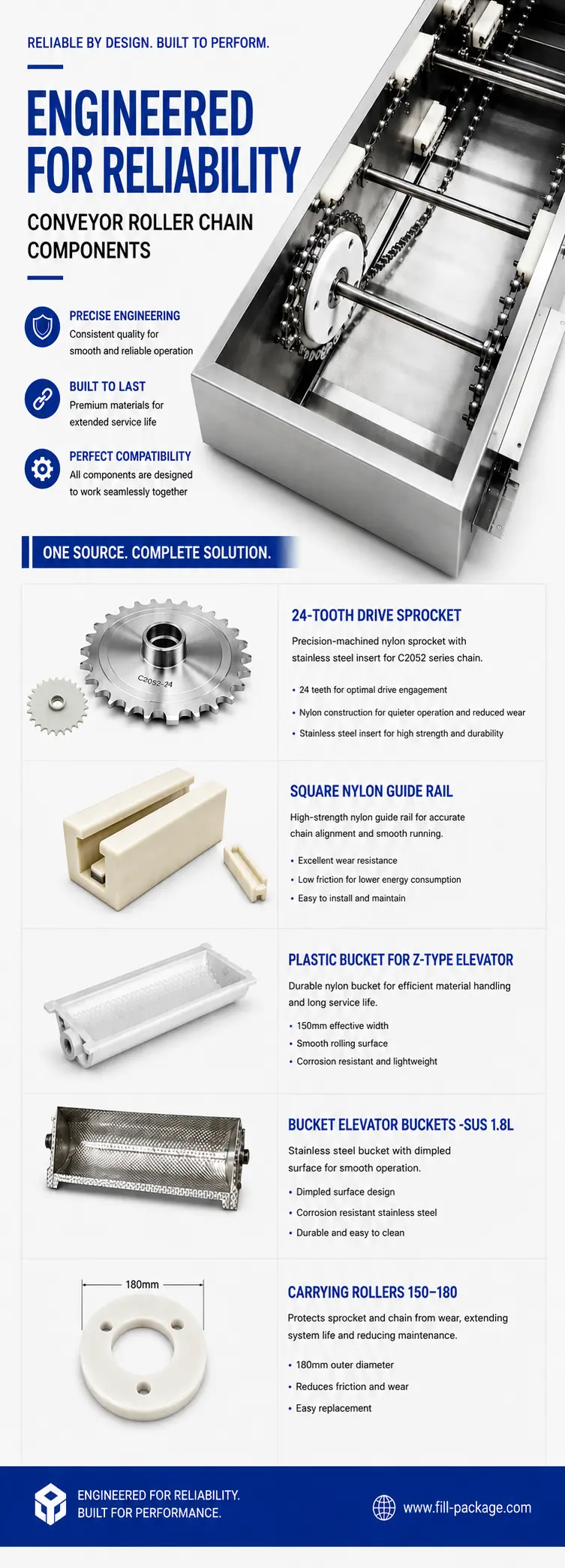
A conveyor roller chain is one part of a system. When any component wears, the others wear faster — a stretched chain accelerates sprocket tooth wear; worn sprocket teeth accelerate chain elongation. We supply the complete matched component set:
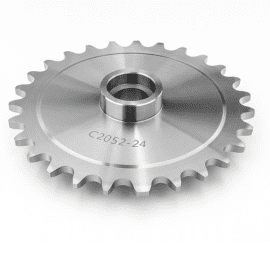
24-Tooth Nylon Drive Sprocket
- Material: food-grade nylon (PA) — quieter, self-lubricating, no corrosion
- Tooth count: 24 teeth standard — matches ANSI double-pitch chain at standard Z-elevator speed ratios
- Food grade: FDA-compliant nylon, compatible with food factory washdown environments
Full sprocket specifications: Conveyor Sprockets page
Square Nylon Guide Rail
- Material: wear-resistant nylon — low friction, self-lubricating, no corrosion
- Profile: square section, fits standard Z-type elevator casing track dimensions
- Function: maintains chain alignment on the return (non-carrying) side of the elevator loop
- Replacement indicator: visible groove deeper than 3mm; chain audibly scraping the rail
Carrying Rollers — 150mm and 180mm
| Size | Приложение | Replacement Indicator |
| 150mm diameter | Standard Z-type elevators — 1.8L and 4L bucket systems | Visible flat spot; roller does not spin freely by hand |
| 180mm diameter | Wide-frame Z-type elevators — 6L bucket systems, heavy-duty | Same — flat spot or seized bearing |
Replace rollers and chain together: A seized or flat-spotted carrying roller creates a localised high-friction point that the chain drags over on every cycle. If replacing the chain due to elongation, inspect all carrying rollers at the same time — replace any that do not spin freely.
Complete Rebuild Reference Table
| Компонент | Qty (typical 1.8L Z-elevator) | Key Specification to Match |
| Chain C2052-PF1-D3F30 | Per elevator height in metres | Pitch 31.75mm; roller ø19.05mm; supplied in matched pairs |
| 24-tooth nylon sprocket | 2 (top drive + bottom tensioner) | Match chain pitch; bore to shaft diameter |
| Square nylon guide rail | Per elevator height — one continuous length | Match casing track width |
| Carrying roller 150mm | Height ÷ roller spacing (typically 300–400mm) | Confirm shaft bore diameter |
| 1.8L Z-type buckets | Height ÷ bucket spacing (typically 200–250mm) | Mounting width: 412 / 416 / 418 / 420mm |
Bucket specifications: Z-Type Elevator Buckets · Bowl-Type Elevator Buckets · DS & DQ Industrial Elevator Cups
How to Diagnose C2052 Chain Wear Before It Causes a Line Stop
Chain elongation is the primary failure mode for conveyor roller chains, caused by wear at the pin-bushing interface. At 2–3% elongation, the chain pitch no longer matches the sprocket tooth spacing, causing ‘tooth climbing’ that accelerates failure exponentially. Replace at 2–3% elongation — before tooth climbing begins.
Check 1 — The 21-Link Measurement (Factory Standard)
Our C2052 chain is factory-measured at 21 links with a 200N measuring load. Use the same method in the field:
| Elongation | 21-link measurement | Action Required |
| 0% — new chain | 666.75mm | — |
| 1% | 673.4mm | Note — monitor more frequently |
| 2% | 680.1mm | Plan replacement now — order chain |
| 3% — replace now | 686.8mm | Replace immediately — tooth climbing imminent |
Check 2 — Sprocket Tooth Profile (Shark-Fin Wear)
On a new sprocket, each tooth has a symmetrical profile. On a worn sprocket, the engagement side is eroded into a hooked ‘shark-fin’ shape. If shark-fin wear is visible on more than 3 consecutive teeth, replace the sprocket together with the chain. Running new chain on shark-fin sprockets causes rapid chain failure within weeks.
Check 3 — Side Plate Condition
Check side plates for lateral wear grooves (from guide rail contact) and fatigue cracks (from repeated sprocket bending). Cracking indicates misalignment or excessive tension — resolve the root cause before installing a replacement chain, or the new chain will fail in the same way.
Check 4 — Roller Rotation
With the elevator stopped, press each roller and check it spins freely. A seized roller converts rolling friction to sliding friction
— creating a wear hotspot that causes link plate failure within weeks of continued operation.
Применение роликовых цепей
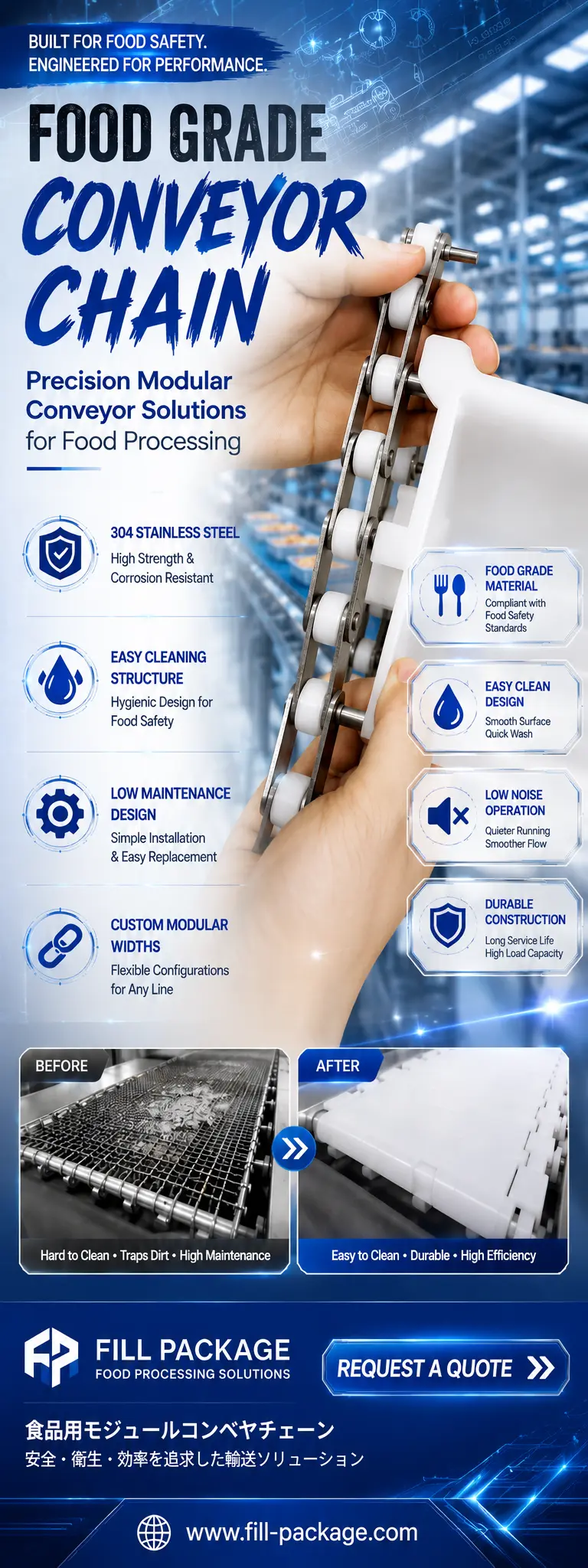
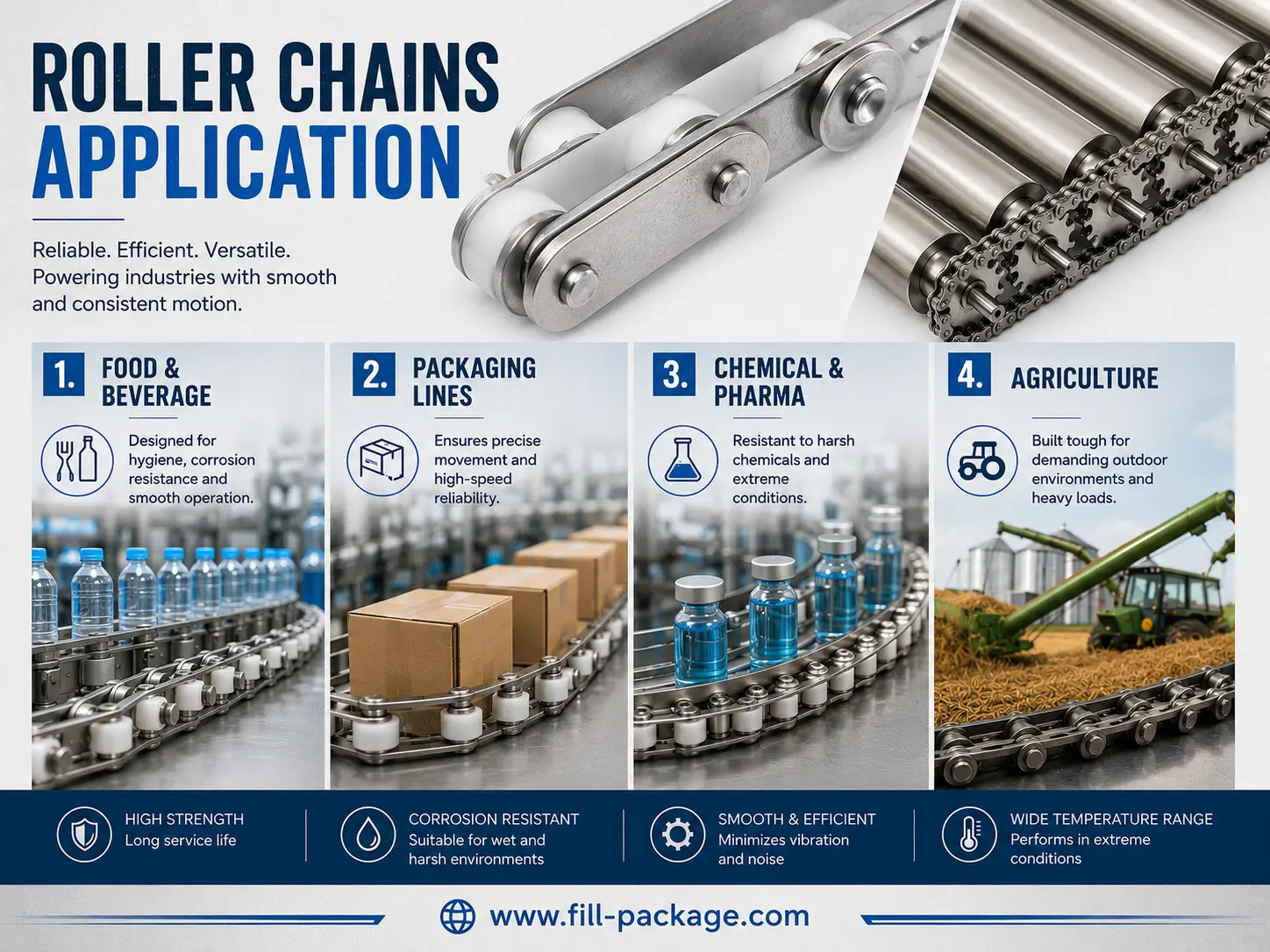
The двухшаговая роликовая цепь является популярным выбором для системы ковшовых элеваторов, вертикальные конвейерыи другие промышленные конвейерные линии Там, где важны высокая нагрузка, плавность хода и длительный срок службы. Ниже приведено практическое руководство по применению и правильному обслуживанию.
🏭 Еда и напитки: Идеально цепь ковшового элеватора для пищевых продуктов для зерна, закусок, кофе, порошков.
📦 Упаковочные линии: Для автоматизированных систем транспортировки мешков и материалов.
⚗️ Химическая и фармацевтическая промышленность: Безопасная транспортировка порошков, гранул или ингредиентов.
🌾 Сельское хозяйство: Поднимает зерно, семена или корм для животных в силосах или амбарах.
🛠 Другие применения вертикальных конвейеров: Любая система, которая нуждается в коррозионно-стойкая цепь ковшового элеватора.

Основы технического обслуживания: поддерживайте конвейерную цепь в идеальном состоянии
1. Поддерживайте правильное натяжение цепи
- Не слишком туго: Чрезмерно натянутые цепи создают нагрузку на звездочки и подшипники, что приводит к более быстрому износу.
- Не слишком свободно: Слабое провисание цепей может привести к соскакиванию звездочек или полному сходу с рельсов — распространенная проблема в конвейерных системах с высокой нагрузкой.
- Совет профессионала: Ориентируйтесь на провисание 2–3% в зависимости от межосевого расстояния звёздочек. Это применимо к большинству промышленные роликовые цепи и конвейерные роликовые цепи одинаково.
2. Обеспечьте точное выравнивание во время установки.
- Держите звездочки ровно и выровненными, чтобы избежать бокового напряжения.
- Несоосность приводит к боковому износу и смещению цепи, сокращая срок службы вашей конвейерная роликовая цепь.
- Для более коротких межосевых расстояний (<0,5 м) поддерживайте несоосность менее 1 мм; для более длинных расстояний — менее 2 мм.
3. Контролируйте износ и своевременно заменяйте
- Всегда заменяйте роликовая цепь и звездочки вместе — несоответствующие схемы износа ускоряют деградацию.
- Для растянутых цепей снимите четные ссылки для сохранения целостности длины и высоты тона.
- С использованием регулируемые звездочки? Переверните их, когда одна сторона износится, чтобы продлить срок службы.
4. Регулярная смазка и чистка
- Смазать между цепные ролики и внутренние втулки для уменьшения трения металла о металл — особенно важно для высокоскоростные конвейерные цепи из нержавеющей стали.
- При длительном хранении очистите керосином или дизельным топливом, затем покройте антикоррозийным маслом или смазкой.
- Периодически проверяйте свой цепь ковшового элеватора на предмет пыли, мусора или засохшей смазки — очистите и смажьте по мере необходимости.
5. Не смешивайте старые и новые цепи.
- Объединение старых и новых цепей приводит к неравномерному распределению нагрузки — основной причине преждевременного выхода из строя конвейерные цепные системы.
- Всегда заменяйте звездочки цепями, чтобы обеспечить равномерный износ и оптимальное зацепление.
C2052 Chain Maintenance: 5 Key Practices
- Tension — aim for 2–3% sag based on sprocket centre distance. Too tight: excessive pin-bushing wear. Too loose: chain jumps or derails under load. Check monthly and after any chain replacement.
- Sprocket alignment — misalignment causes lateral wear on chain side plates. For centre distances under 0.5m, keep misalignment under 1mm. For longer spans, under 2mm.
- Replace chain and sprockets together — new chain on worn sprockets causes rapid failure. Worn chain on new sprockets causes rapid sprocket wear. Replace both when either reaches end-of-life.
- Lubrication — apply food-grade NSF H1 lubricant between roller and bushing (not to outer roller surface). Every 500 operating hours as a starting point. Dry running is indicated by squeaking at the sprocket.
- Link removal for adjustment — remove even-numbered links to restore tension on a chain that has elongated but not yet reached 3%. Adjustable sprockets: flip when one side wears to extend service life before full replacement.
Сопутствующий продукт
Запрос коммерческого предложения или подтверждение совместимости
Know your chain model or pitch? Send us the specification (e.g., C2052, 31.75mm pitch), your roller preference (nylon or stainless), and required length in metres. We provide a quotation within 24 hours, including matched sprocket and carrying roller confirmation. Запросить расценки →
Need a complete matched set? Chain, sprockets, guide rail, rollers, and buckets — all confirmed compatible before shipment. Send us your elevator model or a photo of the existing chain and we specify the complete replacement set before any order is placed. Contact Our Technical Team →
Related Products & Reading
Bucket Elevator Parts Hub — complete range: Z-type buckets, DS/DQ cups, chains, sprockets, guide rails
Conveyor Sprockets — 24-Tooth Nylon Sprocket
Z-Type Elevator Buckets (1.8L, 4L, 6L)
Bowl-Type Elevator Buckets — for fragile and sticky products
DS & DQ Industrial Elevator Cups — grain and bulk material
Полное руководство по комплектующим элеватора ковшового (блог)
Характеристики C2052 ролики увеличенного размера и должен использоваться с звездочки с глубокими зубьями Специально разработаны для этого типа цепи. Стандартные звёздочки не будут зацепляться должным образом. Мы также предлагаем идеально подходящие звёздочки — уточняйте у нас!
Убедитесь, что парные цепи выровнены и равномерно натянуты. Мы рекомендуем регулярно чистить цепь и смазывать её в соответствии с вашими условиями. Мы также можем предоставить полный комплекс услуг. спецификация цепи ковшового элеватора и руководство по техническому обслуживанию.
Да! Помимо стандартных цепных пакетов длиной 10 футов (3 метра), мы предлагаем цепи нестандартной длины и можем добавить специальные функции, такие как удлинённые штифты или специальные крепления. Свяжитесь с нами и сообщите свои характеристики.
Просто нажмите кнопку ниже или позвоните в наш отдел продаж. Мы предоставим вам подробное коммерческое предложение, техническую поддержку и можем отправить образцы в соответствии с вашими потребностями.
C2052 = ANSI double-pitch chain, 31.75mm pitch, 19.05mm roller. PF1 = extended pin attachment type for bucket mounting clips. D3F30 = attachment configuration — D3 refers to the attachment plate geometry, F30 to the extended pin length (30mm). This designation identifies the exact bucket attachment style and ensures the chain matches the bucket clip specification of your elevator.
A standard roller chain (drive chain) uses single-pitch spacing — one pitch between pin centres. A double-pitch conveyor roller chain uses twice that spacing, while keeping the same roller diameter and width. This gives lower chain speed at the same motor RPM and creates the gap between links where bucket mounting hardware attaches. For Z-type bucket elevator systems, double-pitch conveyor roller chain is always the correct specification.
No — not without changing the sprocket. C2042 (25.4mm pitch) and C2052 (31.75mm pitch) require different sprocket tooth geometry. Running C2052 chain on a C2042 sprocket, or vice versa, causes immediate tooth-climbing that will damage both chain and sprocket within minutes of operation. Always match the chain pitch to the sprocket exactly.
Yes — the chain dimensions are identical between nylon and stainless roller versions of the same model, so the chain itself is a direct dimensional replacement. However, also check the carrying rollers inside your elevator casing: if they are currently nylon and you are switching to a wet environment, they may also need to be upgraded to stainless steel. Contact us with your application details and we will confirm whether both chain and carrying rollers need to change.
In a food packaging Z-type elevator running two shifts per day with correct tension, proper lubrication, and aligned sprockets: 18–36 months before reaching the 3% elongation service limit. Key factors that shorten service life: running dry without lubrication, misaligned sprockets generating lateral plate wear, seized carrying rollers creating wear hotspots, and over-tensioning.
Technically yes, using connecting links. However, we recommend full replacement when the chain reaches 2–3% elongation. A splice of new links in a worn chain creates a pitch mismatch at the splice point — new links at nominal pitch, worn links elongated. This causes uneven sprocket engagement (chordal action) that accelerates wear on both the sprocket and the new links simultaneously. Full replacement is more cost-effective in the medium term.
Standard C2052-PF1-D3F30 (nylon or stainless roller): MOQ 5 metres for single replacement orders. OEM bulk supply: price breaks at 50m, 100m, and 500m. Private-label packaging available. Contact us for current OEM pricing
Yes. Provide your elevator height and we calculate the required chain length, adding the appropriate number of links for correct tensioning range. We supply the chain as a pre-cut continuous loop with connecting links included. For odd-link configurations, we include the necessary offset link.
Если вы работаете в сложных условиях — от коррозионные атмосферы к тяжелые ковшовые элеваторы — эти этапы обслуживания могут значительно увеличить время безотказной работы вашей системы и сократить циклы замены.
💡 Хотите получить персонализированные консультации по обслуживанию для вашего двухшаговая роликовая цепь или цепь лифта из нержавеющей стали? Наши инженеры будут рады помочь — просто свяжитесь с нами.