

Flat top chains are widely used in automated packaging and conveying systems where stable and reliable product transfer is required. While they are commonly recognized for their ability to maintain product alignment, their performance depends heavily on chain design, load capacity, and operating conditions.
Understanding these engineering factors helps manufacturers select conveying components that support long-term system stability and efficient production performance.
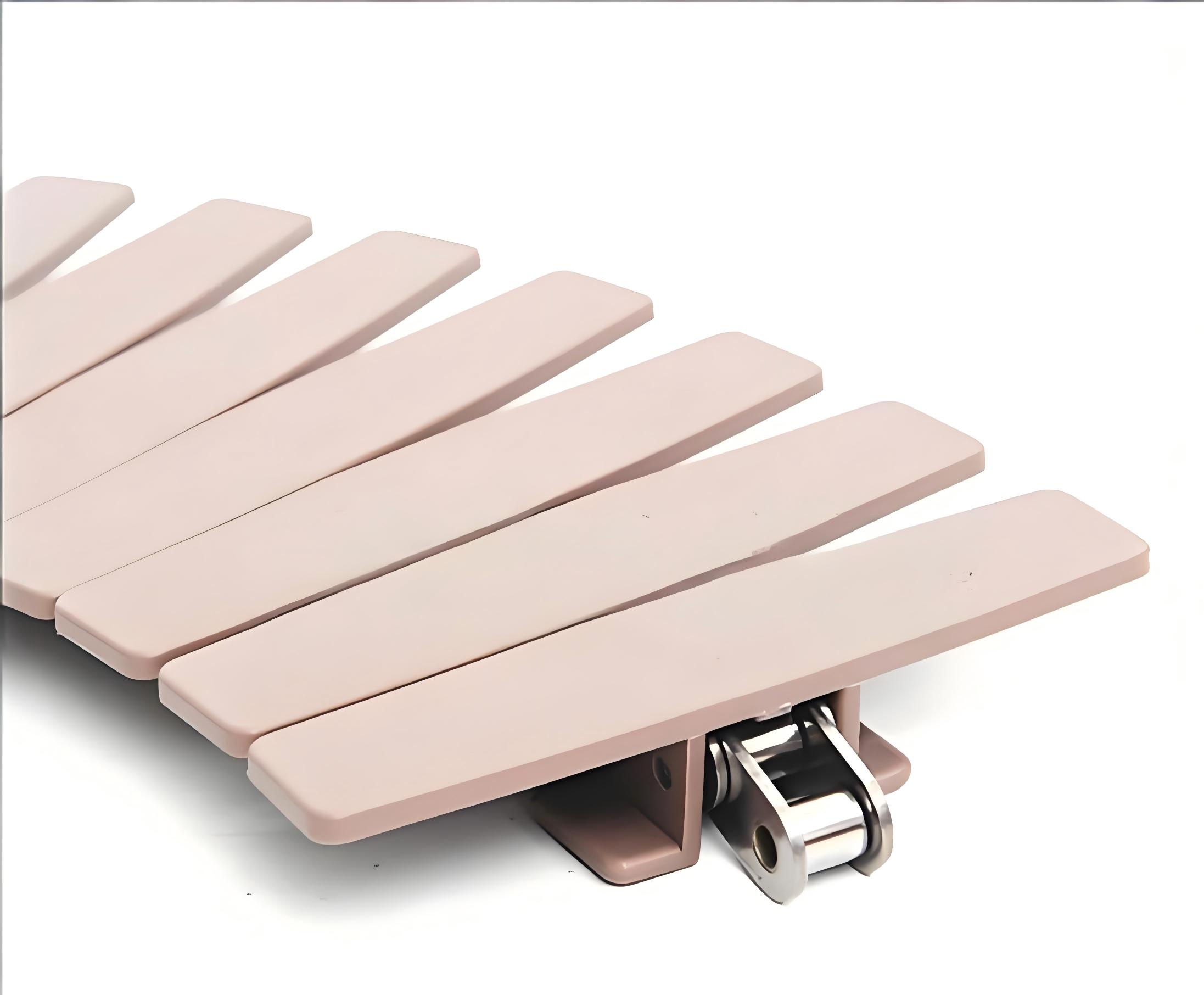
Structural Design of Flat Top Chains
Flat top chains—also known as slat top chains or table top chains—are constructed from interconnected chain links that form a continuous flat conveying surface. Each chain module is designed to support product loads while maintaining smooth movement through sprocket-driven conveyor systems.
The structural design of flat top chains typically includes:
Interlocking chain modules
Reinforced hinge connections
Flat conveying surfaces for product stability
Sprocket engagement points for precise chain movement
This modular chain construction allows flat top chains to maintain consistent conveying performance across straight sections, curves, and machine transfer points.
Load Capacity and Load Distribution Factors
Load capacity is one of the most important performance indicators when selecting flat top chains. Chain strength depends not only on material selection but also on how product loads are distributed across the conveying surface.
Several factors influence load capacity, including:
Chain Module Strength
The thickness and reinforcement of chain modules directly affect their ability to support product weight and resist deformation during operation.
Load Distribution Across the Conveyor Width
Even load distribution helps reduce stress concentration on individual chain modules. Uneven product loading can increase wear and reduce chain service life.
Sprocket Engagement and Drive Efficiency
Proper sprocket engagement ensures smooth chain movement and balanced load transfer. Incorrect sprocket alignment can create excessive stress and reduce conveyor performance.
Selecting flat top chains with appropriate structural strength helps maintain stable conveying performance and reduce mechanical stress on conveyor components.
Material Selection and Its Impact on Performance
Material choice plays a significant role in determining chain durability, environmental resistance, and long-term operational stability.
Plastic flat top chains are widely used in packaging applications requiring smooth product handling and hygienic conveying conditions. Their low friction characteristics support stable high-speed operation in food and beverage packaging environments.
Stainless steel flat top chains are typically used in applications requiring higher structural strength, temperature resistance, and corrosion resistance. They are commonly selected for industrial conveying environments and heavy-duty applications.
Choosing the appropriate material helps optimize conveyor performance under specific operating conditions.
Speed and Operational Performance Considerations
Packaging lines often operate at high production speeds, making conveying stability essential for maintaining product flow consistency.
Flat top chains support high-speed operation by providing:
Predictable chain movement
Stable product positioning
Reliable synchronization with packaging equipment
Chain speed selection should be matched to product characteristics, conveyor layout, and packaging line requirements. Operating beyond recommended speed ranges may increase wear and reduce chain service life.
Chain Wear and Maintenance Factors
Like all conveying components, flat top chains experience wear during long-term operation. Understanding wear factors helps manufacturers plan maintenance strategies and improve system reliability.
Common wear influences include:
Friction between products and conveying surfaces
Environmental exposure such as moisture or chemicals
Improper chain tension or alignment
Uneven load distribution
Routine inspection and maintenance help ensure flat top chains maintain stable conveying performance throughout their service life.
Conveyor Layout and Performance Optimization
Flat top chain performance is also influenced by conveyor system layout. Proper conveyor design helps ensure smooth chain movement and consistent product transfer.
Important layout considerations include:
Conveyor length and transfer points
Curved or side-flexing sections
Machine-to-machine transfer stability
Drive and tensioning system design
Optimizing conveyor layout helps reduce chain stress and supports reliable packaging line operation.
Supporting Long-Term Packaging Line Reliability
Selecting flat top chains based on structural design, load capacity, and operating conditions helps manufacturers improve packaging system reliability. Proper chain selection reduces unexpected downtime and supports consistent production efficiency.
Understanding these engineering principles allows packaging system designers to select conveying components that align with long-term production goals.
Explore Flat Top Chain Solutions
Flat top chains play an important role in supporting stable and efficient packaging line conveying performance.
👉 Learn more about Flat Top Chains for Packaging Lines
👉 Explore Plastic Flat Top Chains for hygienic and high-speed packaging environments
👉 Discover Stainless Steel Flat Top Chains for demanding industrial applications